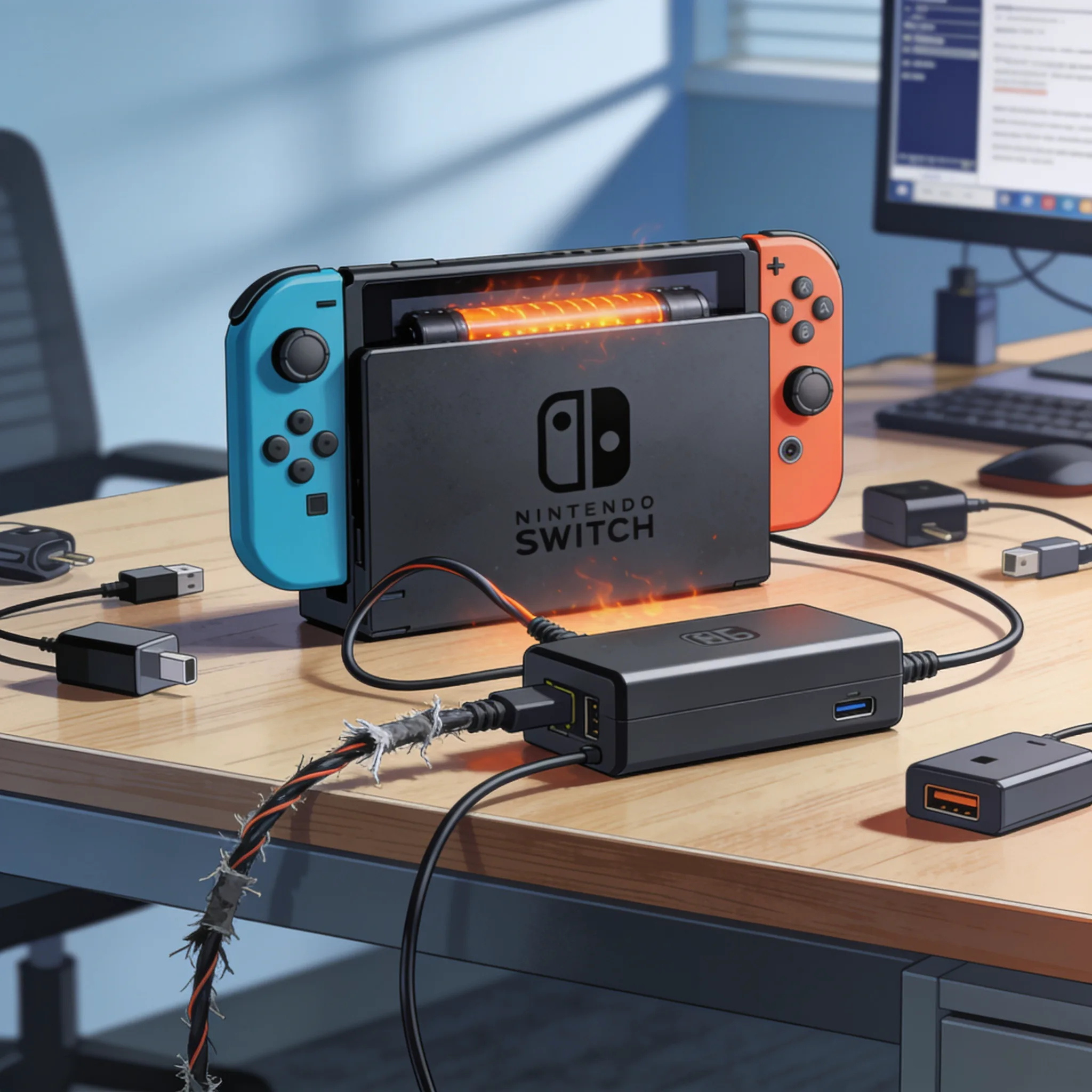
Gaming handheld consoles like the Nintendo Switch face inevitable battery degradation due to lithium-ion technology limits. An article published November 16, 2026 by Engadget details common charging errors that accelerate this process.
Key Charging Errors to Avoid
Letting the battery drain completely to zero burns through charge cycles faster than necessary. Lithium-ion batteries have a finite number of cycles, often exceeding 800 for the original Switch model, but reaching this limit reduces capacity. Nintendo advises charging the device once every six months if not in active use to prevent permanent charging failure.
Charging to 100% regularly also shortens battery life. The optimal range for most lithium-ion devices sits between 20% and 80%. The Switch 2 includes a Stop Charging Around 90% setting in System Settings to help users maintain this balance. Users should disable this feature before trips requiring maximum playtime.
Ambient temperature significantly impacts battery health. The official operating range spans 41 to 95 Fahrenheit (5 to 35 Celsius). Charging in extreme heat accelerates capacity loss, so leaving the console in direct sunlight or charging outdoors during intense summer weather should be avoided. Extreme cold affects performance but does not cause permanent damage.
Battery Replacement Challenges
Replacing a Switch battery involves significant complexity. The battery is embedded within delicate electronics rather than housed in an accessible compartment. Nintendo strongly recommends contacting Customer Service instead of attempting DIY repairs on Switch 1 models, as no official guide exists for those units.
Switch 2 consoles with the BEE-001(-01) marking contain user-replaceable batteries, but only when using Nintendo's specific BEE-003(-01) Battery Replacement Kit. Proper installation requires careful handling and an electrically grounded surface to prevent static shock from damaging circuitry.
What it means
Proper charging habits can delay battery degradation long enough for many users to reach their next console upgrade without needing a replacement. However, the inability to easily swap batteries on older models means poor charging practices could leave owners with a device unusable outside the dock years before newer hardware arrives.
The requirement for specialized tools and official kits on Switch 2 adds cost and complexity to maintenance. Most owners will rely on Nintendo's service network rather than performing replacements themselves, making preventative care through correct charging essential for extending usable lifespan.
Would you adjust your current charging routine based on these findings, or do you prefer maximizing playtime regardless of potential long-term battery impact?