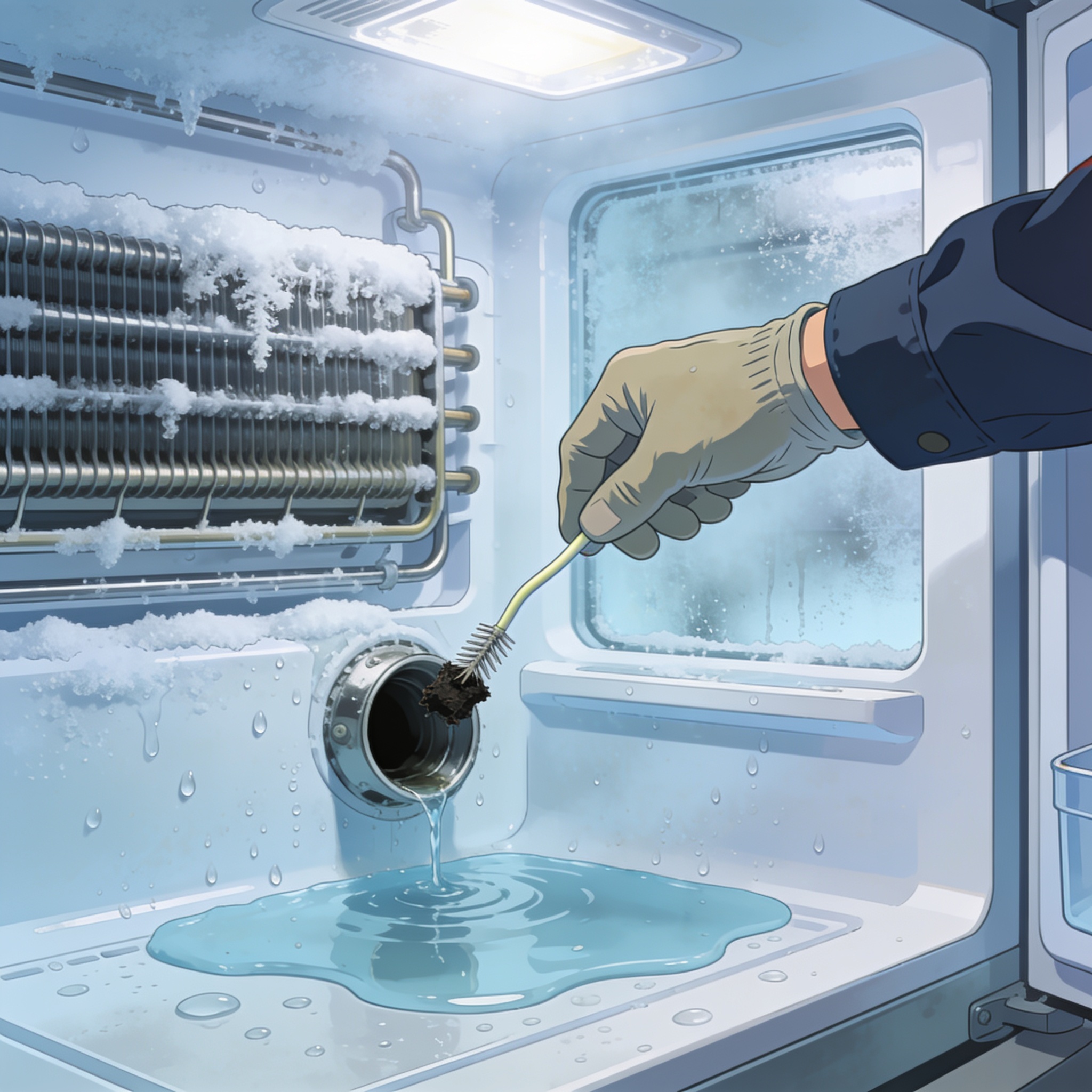
Refrigerator drain blockages commonly cause water accumulation under vegetable drawers, puddles on the floor near the appliance, or dripping inside the unit. TechTudo reports that most obstructions can be cleared without disassembling the refrigerator or hiring a technician, provided users follow manufacturer-specific instructions.
The process begins by unplugging the appliance and removing food items and drawers to access the drain outlet. In many Frost Free models from brands like Brastemp and Consul, the drain is located behind the vegetable drawer at the bottom of the refrigerator compartment. Electrolux units with bottom freezers may have the drain at the evaporator base behind the rear panel. Samsung models typically show the drain hole at the freezer floor or inner back wall.
Clearing the Obstruction Safely
Users should insert a flexible cleaning rod designed for drain maintenance into the small outlet hole to remove debris blocking water flow. Afterward, pouring a small amount of warm water into the freezer checks if liquid drains properly through the outlet. This method applies to Brastemp, Consul, Electrolux, and Samsung refrigerators.
Never use knives, rigid wires, sharp objects, boiling water, or corrosive products to clear the drain. These actions risk puncturing internal tubing or damaging components. If a rubber pin exists in the drain hole, gently manipulating it helps loosen dirt. Always consult the owner manual before attempting any intervention to avoid forcing parts incorrectly.
Handling Ice Blockages
When ice blocks the drain channel, natural defrosting is the safest solution. Unplug the refrigerator, empty the contents, and leave doors open until the ice melts completely. Whirlpool, which owns Brastemp and Consul, suggests leaving the unit off for approximately two hours for light translucent ice buildup. Larger ice blocks require more time.
Avoid breaking ice with knives or spatulas, and do not apply hair dryers or heaters directly to the appliance. Direct heat or force can damage the evaporator and sensitive internal parts. If the obstruction persists after natural thawing, contact technical support.
Does Cleaning Restore Cooling?
Drain blockages primarily cause water leakage rather than loss of refrigeration capacity. If the refrigerator continues to cool but leaks water, clearing the drain usually resolves the issue. However, if the appliance stops cooling effectively, the problem likely involves other factors such as temperature settings, door seals, blocked air vents, or excessive frost on the evaporator.
In cases where cooling performance does not improve after drain cleaning, a professional diagnosis is necessary. A large ice block on the evaporator can simultaneously clog the drain and hinder airflow, creating the appearance of a single problem when multiple issues exist.
Preventing Future Blockages
Regular interior cleaning prevents food crumbs and spilled liquids from accumulating near the drain outlet. Keep food packages away from the inner back wall to avoid pushing debris into the channel. Ensure doors close tightly to reduce condensation and ice formation. Maintain proper leveling so water flows correctly toward the drain tray.
Do not pour cleaning liquids or chemicals directly into the drain unless authorized by the manufacturer. Frequent recurrences despite maintenance indicate potential system faults requiring specialized evaluation.
What experience have you had with refrigerator drainage problems, and did DIY methods work for your specific model?