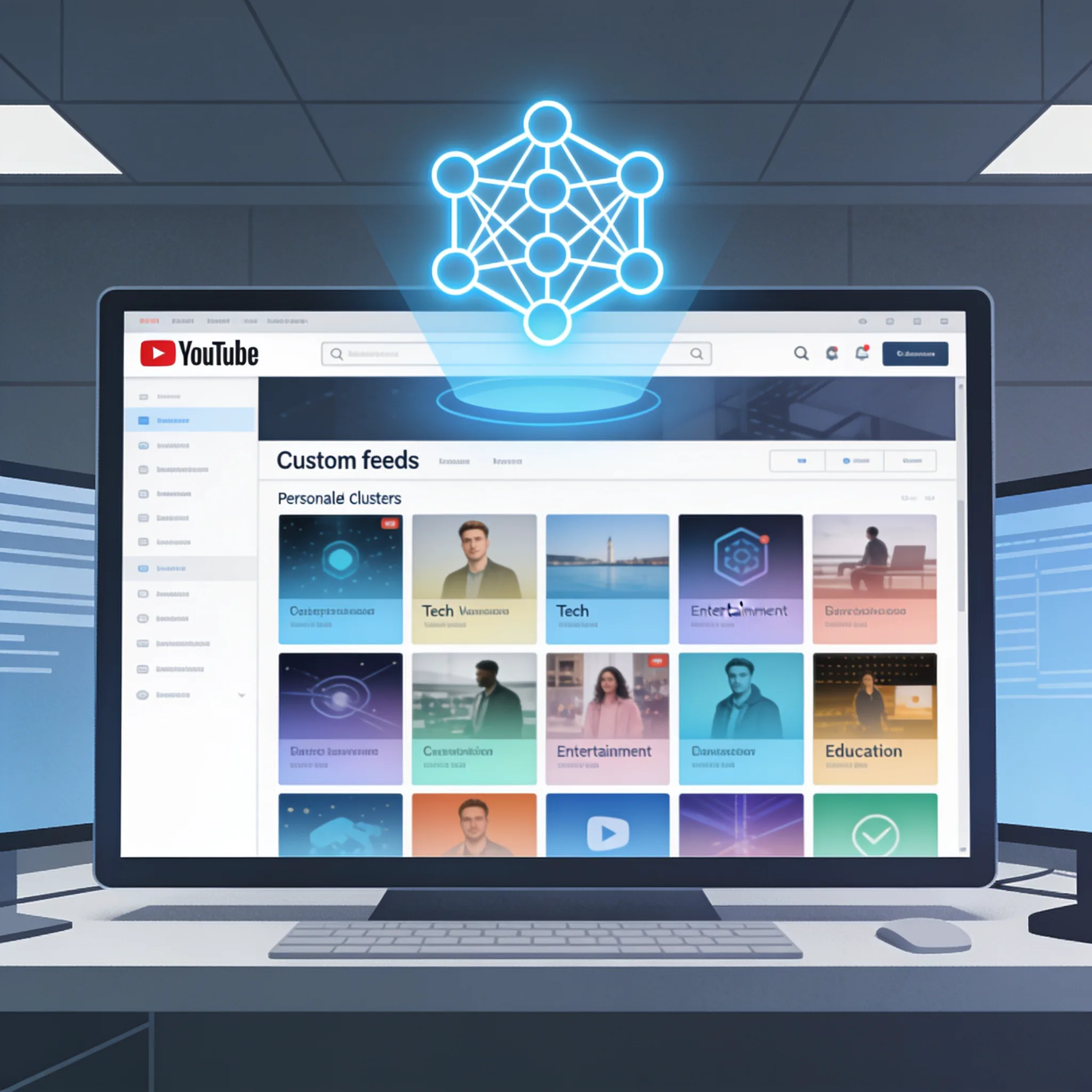
YouTube has introduced a new feature called custom feeds, designed to give users more control over the content appearing on their homepage. Launched in October 2026, this tool allows viewers to use natural language prompts to curate feeds based on their interests.
To set up a custom feed, users tap the plus sign or Custom Feed option at the top of their homepage. A text box appears where they can type requests such as I want retro tech nostalgia: 80s commercials, vintage PCs, CRT glow. Alternatively, users can ask for broader exploration like I want to explore something completely different beyond my usual feed.
Once created, these feeds appear at the top of the screen for easy access. Users can modify prompts within each feed to adjust content suggestions. The feature syncs across mobile and desktop devices when signed into an account.
Subscription status affects how many custom feeds can be saved. Non-Premium users may keep up to three feeds, while YouTube Premium subscribers can save up to eight. All feeds expire after 30 days of inactivity, though new prompts can be created afterward.
Custom feeds are subject to YouTube community guidelines. Currently, the feature is only available in English and requires search history to be enabled. Availability is restricted to the United States.
Alongside custom feeds, YouTube updated its mobile app homepage layout. A row of category feeds now appears at the top, including options like Live and Music. Some categories depend on subscriptions; for example, Movies & TV requires Primetime Channel subscriptions. The Subs feed moved to the top bar for easier navigation.
These changes aim to create a more seamless Home experience according to YouTube. Users can return to their standard homepage by tapping the Home tab on the left side of the interface.
What it means
The custom feeds feature shifts some curation responsibility from YouTube's algorithm to user input. This gives regular viewers more direct influence over what appears on their homepage without needing to manually like or dislike videos. However, the limitation to English and the United States means most global users cannot access the tool yet.
The expiration rule after 30 days of inactivity suggests YouTube wants active engagement rather than passive collection of feeds. The distinction between Premium and non-Premium limits indicates the company views this as a value-add for paying subscribers. Users who rely heavily on YouTube for specific content types may find the ability to lock in niche topics useful, especially if they struggle with algorithm drift.
Uncertainty remains about how long the feature will stay available and whether it will expand to other languages or regions. The requirement for search history to be enabled also means users who prefer anonymity or minimal tracking might need to adjust their settings to use the feature.
Would you try creating custom feeds to narrow down your YouTube browsing, or do you prefer letting the algorithm decide what shows up?