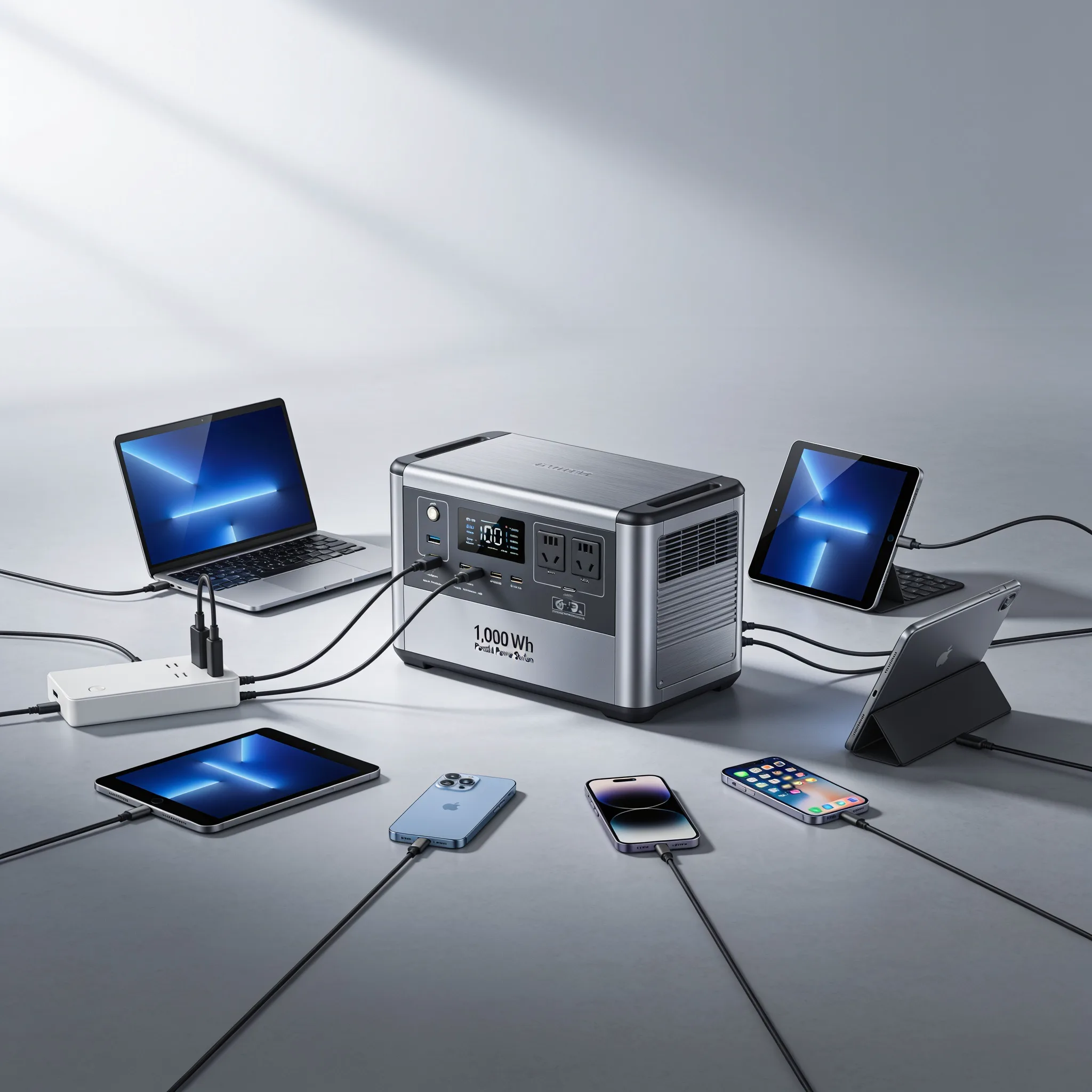
Determining how long a 1,000 watt-hour portable power station can operate devices involves more complexity than dividing battery capacity by device power consumption. While simple math might suggest a 200-watt refrigerator could run for over five hours or a 65-watt laptop for well over 15 hours, real-world performance falls short of these estimates.
Testing the Jackery Explorer 1000 v2, which is rated at 1,024Wh with up to 1,500W output, reveals significant discrepancies. The manufacturer promises only four hours for a 200-watt fridge and 11 hours for a 65-watt laptop, despite theoretical calculations suggesting longer durations.
The primary factor limiting runtime is power conversion efficiency. When using AC outlets, energy converts from DC to AC, wasting between 5 to 20 percent in the process. Additional inefficiencies occur when plugging in wall adapters that convert AC back to DC for mobile devices. These double conversions significantly reduce available energy.
Device power consumption also varies widely during operation. A gaming laptop may draw only a few dozen watts while browsing but exceed 200 watts during intensive tasks. Mobile phones consume different amounts depending on activity, with streaming video over 5G requiring substantially more power than light usage.
What it means
Users planning emergency preparedness or outdoor activities should expect shorter operational times than advertised specifications imply. This affects budgeting for equipment needs, as higher-capacity stations may be necessary to ensure adequate backup power duration.
Optimizing power station usage requires strategic choices about what gets plugged into AC versus USB ports. Keeping units within optimal temperature ranges and avoiding deep discharge cycles helps maintain battery health over time. Users need to account for these practical limitations when selecting equipment for specific use cases.
Practical tips for maximizing runtime
Plugging mobile devices directly into built-in USB ports reduces conversion losses and preserves AC outlets for critical equipment. Maintaining ambient temperatures between 59 and 95 degrees Fahrenheit keeps lithium iron phosphate batteries operating efficiently. Avoiding unnecessary deep discharges extends overall battery lifespan and usable capacity.
Battery capacity diminishes over time based on charging cycles, meaning a kilowatt-level supply will gradually lose effectiveness. Users should consider this degradation when evaluating long-term value and replacement schedules.
Would you adjust your portable power station setup based on these efficiency realities, or do you prefer oversizing for safety margins?