Workers who rely heavily on generative artificial intelligence for creative tasks may experience reduced work quality and lower job satisfaction, according to research published Nov. 10 in the PNAS Nexus science journal.
The study, led by Kartik Hosanagar, a professor at the University of Pennsylvania, examined whether trade-offs between productivity and creativity are inevitable when using AI tools. The team tested three different collaboration designs with 285 students over two days to determine which approach yielded the best results.
On the first day, participants completed writing assignments without AI assistance. On the second day, they were divided into three groups using distinct interaction models:
Human Confirmation Group In this model, the AI handled planning, outlining, writing, and editing, with humans only approving each step. Participants in this group produced the lowest quality work and reported the least creative diversity. They also expressed significant dissatisfaction with the final output.
Human Creativity Group Here, humans managed the outlining and planning while the AI executed the writing and editing. This approach resulted in better work quality and faster completion times compared to no AI use. Participants reported a more positive experience with their contributions.
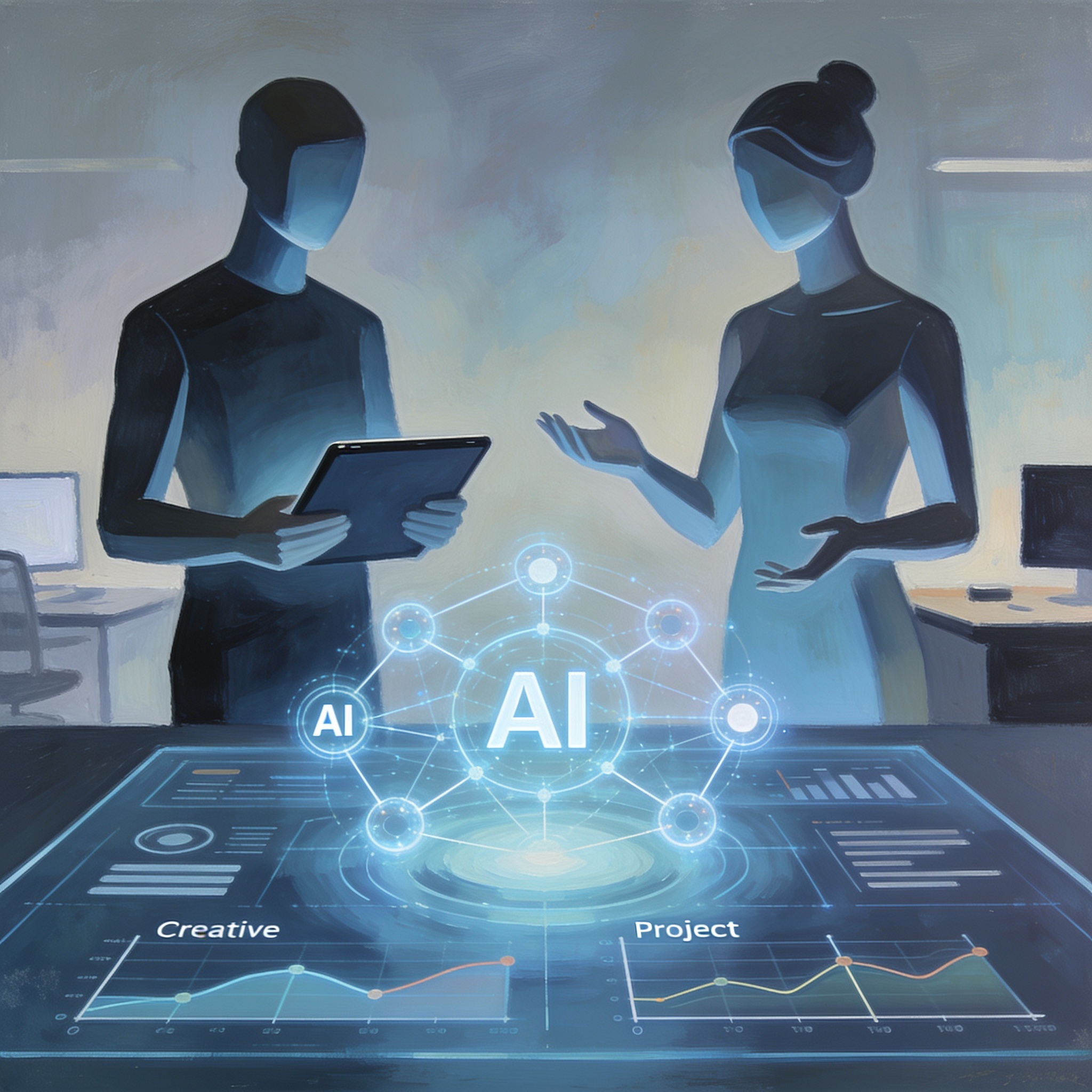
Copilot Group Humans and AI collaborated throughout the entire process, sharing responsibilities during ideation and execution. Like the Human Creativity group, this method produced superior work quality and speed, with participants feeling more satisfied with their roles.
All three AI-assisted groups achieved similar productivity benefits, saving time on tasks. However, the study highlighted that the method of collaboration mattered more than simply using the technology. The researchers concluded that the best outcomes occur when humans remain actively involved in creative tasks, particularly generating ideas and creating outlines, while AI assists with execution.
Hosanagar warned that excessive reliance on AI could lead to a loss of critical thinking skills, comparing it to how GPS navigation has diminished people's ability to navigate familiar neighborhoods without digital aids. The research suggests that satisfaction comes from having a meaningful creative role rather than just producing a good final product.
Tech companies continue to invest millions in integrating AI for efficiency, even as some reduce human workforces through layoffs. Workers report saving 40 to 60 minutes daily but face concerns about skill erosion and confidence loss. Teachers have also noted that AI usage is changing educational dynamics, with some arguing it ends traditional homework practices.
The findings indicate that organizations should design AI-human workflows to support broader goals beyond mere speed. Automating too much of the creative process risks diminishing both the quality of output and the worker's sense of accomplishment.
What it means This research highlights that the value of AI in the workplace depends heavily on how humans interact with the technology. Employees who allow AI to take over the entire creative process may find themselves doing less meaningful work, potentially affecting their professional growth and job satisfaction.
For businesses integrating AI tools, the data suggests that training staff to maintain control over ideation and planning phases will yield better results than fully automated workflows. Workers should consider keeping human judgment central to creative decisions while leveraging AI for execution tasks like drafting or editing.
Uncertainty remains regarding long-term impacts on specific industries or professions where creative input varies widely. The study focused on student writing assignments, so real-world application in complex professional environments requires further observation.
Do you adjust your use of AI tools based on the type of task you are performing?