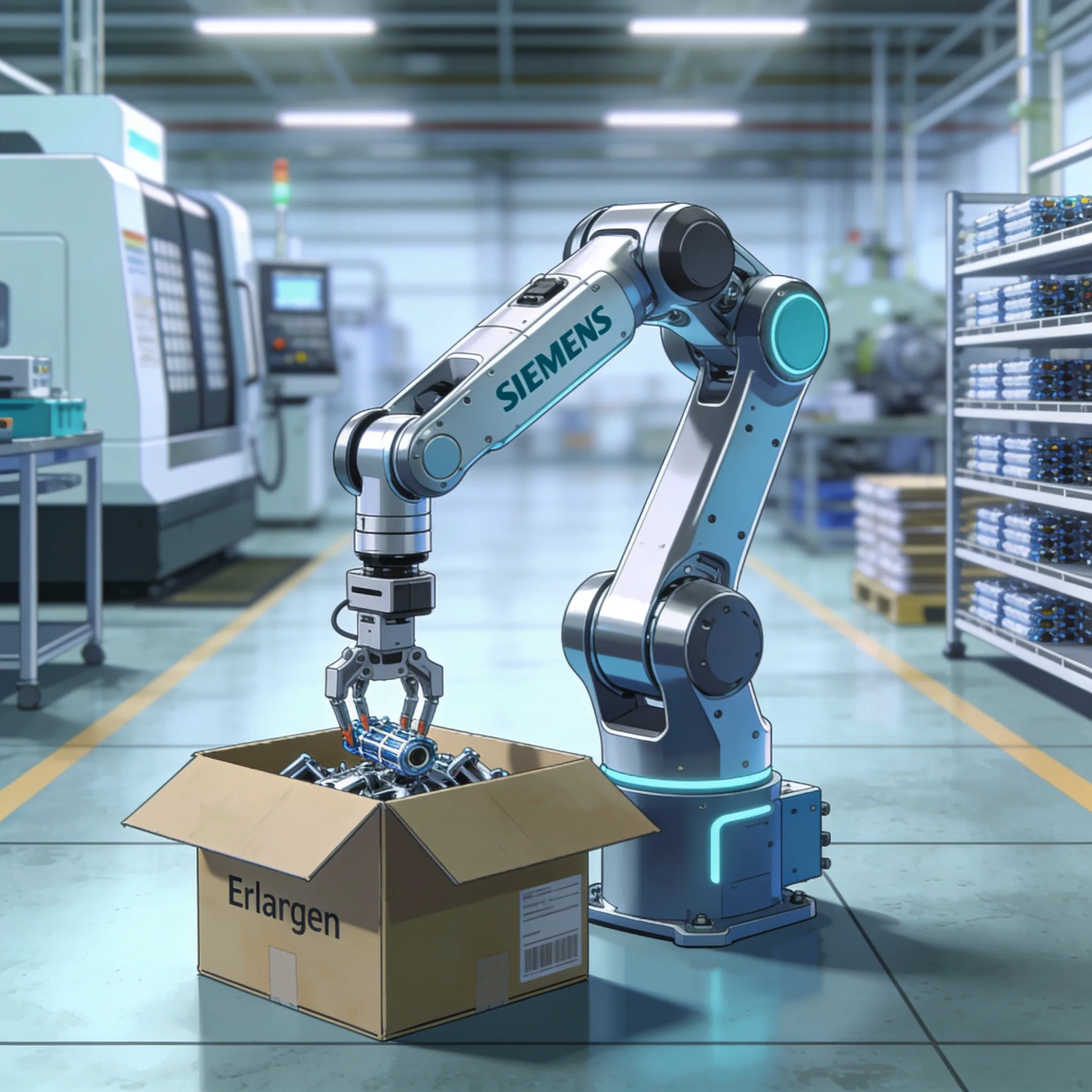
Siemens is developing an AI-powered robot designed to unpack incoming component deliveries at its electronics factory in Erlangen, Germany. The company announced the development on Tuesday while showcasing several artificial intelligence tools at the SPS automation fair held in Nuremberg.
Unlike traditional robots that rely on fixed programs, this new system uses AI foundation models trained for physical tasks. Cameras monitor the workspace while the AI determines the next steps, allowing the robot to open cartons and remove reels of components from packages that vary significantly in type and size. Siemens stated that such variability makes unpacking a task that fixed robot programs cannot currently handle, meaning it remains mostly done by hand in many facilities.
The plant receives between 80 to 200 packages daily, according to trade site All About Industries. The AI system learned from humans steering the robot remotely and operates on Siemens industrial PCs equipped with Nvidia chips. Siemens has not disclosed when the robot will be ready for full deployment.
In April, the same facility ran an eight-hour trial with a humanoid robot developed in partnership with Nvidia. Similar technology is already being used in commercial settings; Warsaw-based Nomagic reported that its AI systems have halved the frequency with which their robots require human assistance.
What it means
This development signals a shift toward automating complex, unstructured tasks in manufacturing that were previously considered too difficult for robotics. If successful, factories could see reduced reliance on manual labor for routine but variable processes like unpacking, potentially lowering operational costs and improving efficiency.
The introduction of the Autonomous Production Planner suggests broader changes ahead for production scheduling. By using multiple AI agents to create and test schedules in digital factory models, companies may achieve significant reductions in manual planning time and expenses. However, Siemens has not provided specific timelines for these tools becoming available to other manufacturers.
While early results appear promising, questions remain about how widely applicable this technology is across different industries and whether similar cost savings can be realized outside Siemens’ own facilities. Customers will need to evaluate if the investment in AI-driven hardware and software aligns with their specific production needs.
Would you trust an AI robot to handle sensitive or high-value components in your workplace?