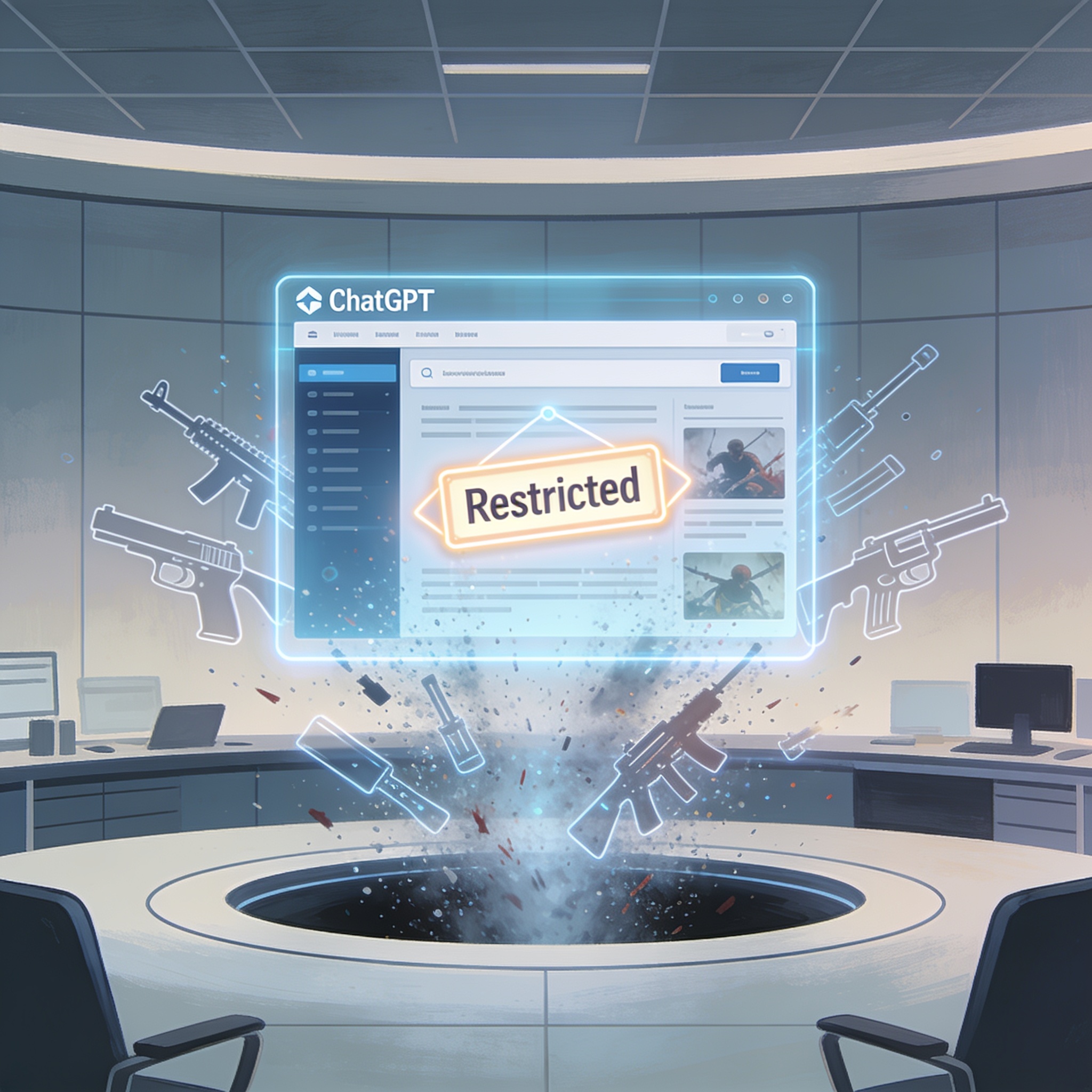
OpenAI has announced new safeguards for ChatGPT relating to weapons and violence. The changes include additional limits for adolescents, adjustments to responses about mass attacks, and mechanisms to identify conversations that may indicate real risk of violence. The moves were disclosed on a Friday as part of a safety procedures review. In addition to restricting certain content, OpenAI aims to improve analysis of conversation context and broaden reporting of suspicious situations to authorities. The changes apply to all users but include extra protections for users under 18. One initiative is a Community Safety Report that will compile information on threat identification, steps taken for concerning behavior, and the effectiveness of prevention measures, with the first edition due in early 2027 and data covering the second half of 2026.
OpenAI said it also conducted more than 200 police communications in Q3 2026 in cases deemed potentially serious threats, aided by mental health and behavior experts and consideration of input from families and public authorities. The restrictions extend to adult users as well: ChatGPT will provide less detailed answers about past mass attacks and the people responsible, aiming to avoid detailed reconstruction that could aid replication. The system will limit operational details about weapons and equipment, how they were obtained, and comparisons of damage, while preserving the ability to discuss events at a high level and offer information about impacts, victims, and warning signs.
A new emphasis on context means the model will consider recent messages to determine when to restrict information that could be misused. If signals of violence fixation are detected, the system may automatically end the conversation, and multiple closures could lead to temporary suspension of the account. For users under 18, protections are broader: even seemingly harmless questions about weapons may be limited to prevent practical information that could facilitate harm, though discussions about violence prevention and seeking help remain allowed. A age-assessment system uses behavioral signals to steer younger users to protections, with parental verification available via a partner identity service if an adult is misclassified as under 18. Parental controls will also expand, including alerts to guardians when a teen’s account is suspended after repeated violence-related conversations. The updated protections will roll out in the coming weeks as OpenAI continues refining its detection of warning signals and the decision to limit responses or interrupt conversations. The company stresses that addressing violence requires collaboration with families, professionals, and authorities.




Leave a comment
Your comment appears after you verify your email. We replace % $ { } [ ] < > with periods and display the text safely.
Published comments (0)
No comments yet. Start the conversation.