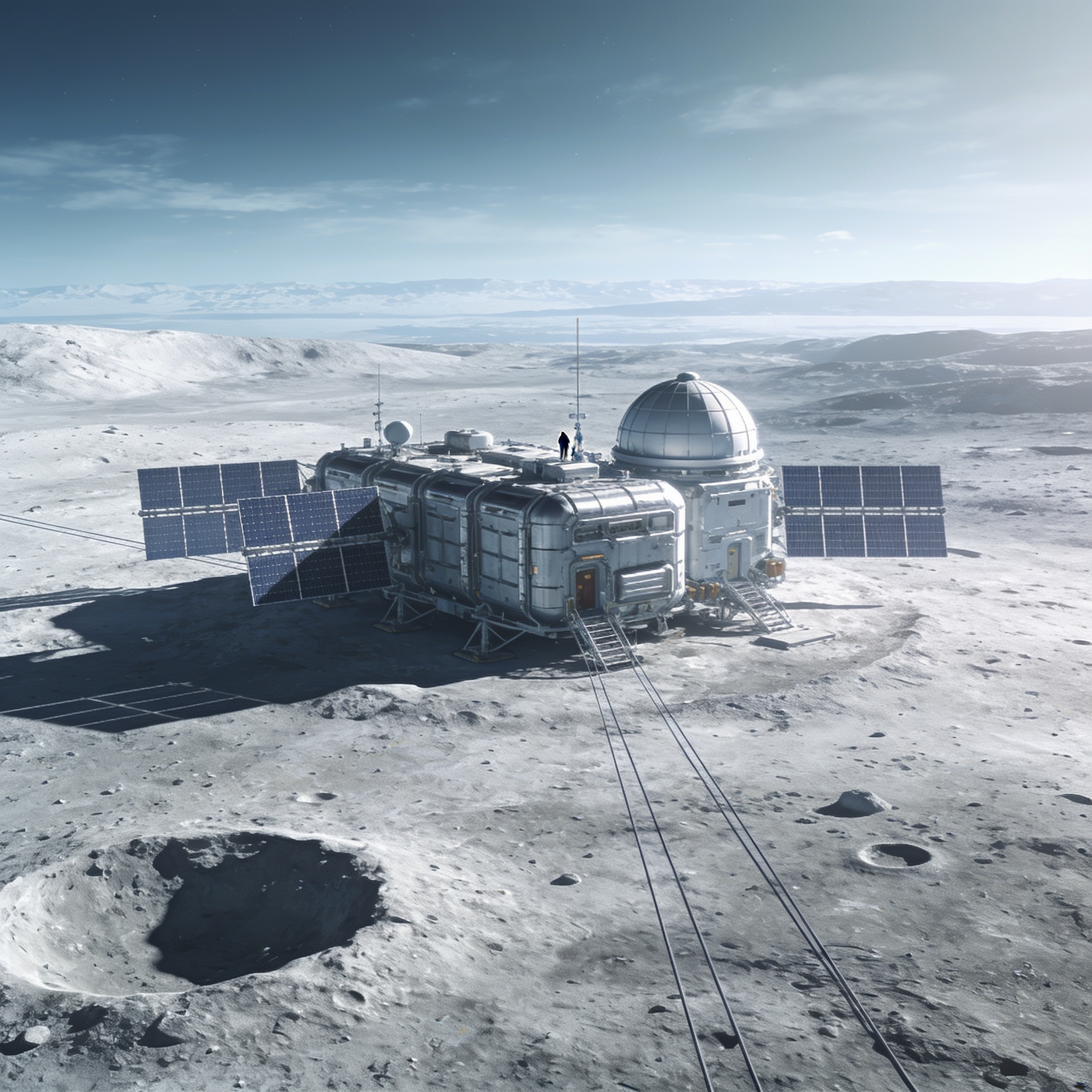
The National Aeronautics and Space Administration intends to establish a permanent base at the lunar south pole by 2032. This initiative aims to transform a specific region of the Moon into an outpost where humans can live, work, and explore the surface. The agency plans to divide the construction into stages and will rely on private companies to develop vehicles, energy systems, and communication equipment.
Construction Phases and Timeline
The building process will occur gradually. The first phase is scheduled to conclude by 2029, during which the agency will send robotic equipment to test technologies and demonstrate that necessary infrastructure can be transported and installed. These missions will also help identify terrain conditions and prepare for future human operations. The second stage spans from 2029 to 2032 and focuses on expanding the structure to install resources required for the base to function. The third phase begins when the outpost enters operation, though no specific date has been set for this moment.
To organize these missions, the agency created CLPS 2, a new long-term contract structure with private enterprises. This program sets a combined maximum limit of $10 billion over ten years. Eight companies were selected to compete for the work: Blue Origin, Firefly Aerospace, Intuitive Machines, ispace-U.S., Lockheed Martin, Northrop Grumman, SpaceX, and Voyager Technologies.
Nuclear Rover and Resource Exploration
One of the initial tasks involves exploring the south pole for resources that could support human presence. The NASA plans to deploy the Polar Rover for Observation, Mapping, and In-Situ Exploration, known as PROMISE. This vehicle will be powered by nuclear energy and is expected to begin exploration of the region from late 2028. Its mission includes investigating the terrain and searching for volatile materials, specifically water ice.
Water presence is critical because it serves as a useful resource for future activities. The rover will feature a drill and scientific instruments capable of analyzing both the surface and subsurface. NASA intends to utilize an engineering model developed from the Perseverance and Curiosity rovers used on Mars, adapting it for lunar conditions. The vehicle will be transported by the Blue Moon Mark 1 landing module provided by Blue Origin.
Transportation and Communication Systems
Establishing such a structure requires more than rockets capable of reaching the Moon. It necessitates transporting cargo, moving equipment in orbit, and developing systems for teams to communicate with Earth and each other. Testing will be conducted through the VADR program, which predicts commercial launch and transport space missions. Objectives include demonstrating cargo transfer between Earth and lunar orbit, testing navigation technologies with the CAPSTONE 2 mission, and conducting surface reconnaissance with MoonFall drones.
Communication will play a significant role. NASA selected SpaceX to launch communication satellites in 2028 using the Starship rocket. The goal is to establish a lunar network with spacecraft similar to those used in the Starlink system, allowing contact maintenance with equipment and astronauts on the surface. Other companies, including Honeybee Robotics, Redwire, and Yank Technologies, will work on components of miniCAST, a tower designed to provide power and communication on the Moon.
What it means
This plan signals a shift toward sustained human activity beyond low-Earth orbit, moving from temporary visits to long-term habitation. For the aerospace industry, the $10 billion contract framework offers substantial opportunities for private firms to participate in deep-space logistics and infrastructure development. Consumers and taxpayers may see increased reliance on commercial partners for government space objectives, potentially altering how national space programs operate.
Uncertainty remains regarding the final operational date once the 2032 deadline passes and whether all planned technologies will integrate successfully. The success of the nuclear rover and satellite network depends on overcoming technical challenges in extreme lunar environments. Until the first humans arrive, the timeline for full functionality of the outpost remains a projection rather than a guaranteed outcome.
Would you trust a nuclear-powered rover to locate water ice on the Moon, or do you have concerns about the safety and reliability of such technology?