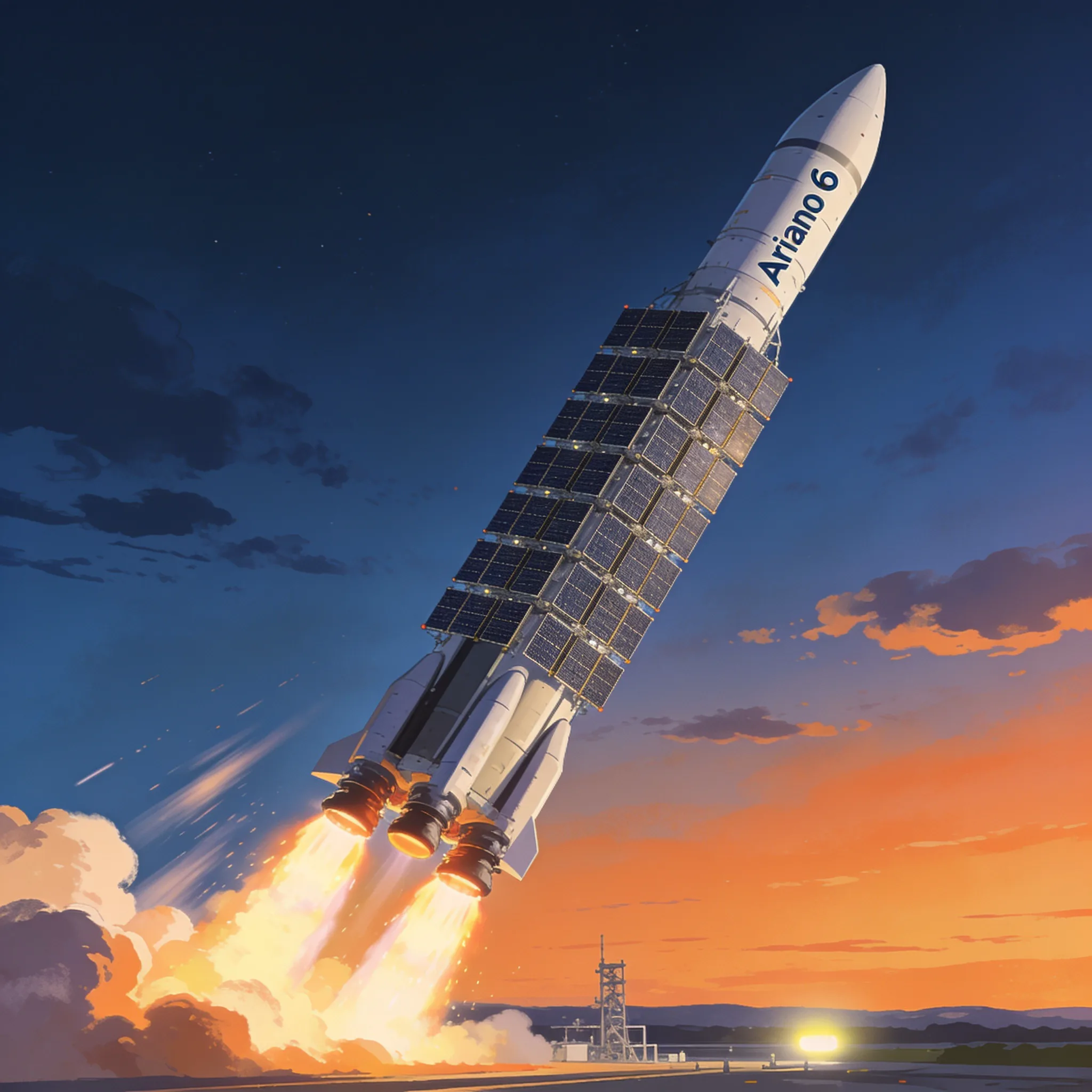
Europe's Ariane 6 rocket successfully launched 36 Amazon Leo satellites into orbit on Tuesday, marking a recovery effort following a significant setback for the satellite internet provider. The mission lifted off from French Guiana at approximately 6:15 a.m. New York time and released all payloads about two hours later.
This was the tenth flight of the Ariane 6 vehicle and the fourth dedicated to Amazon by Arianespace. The launch comes just nine days after a United Launch Alliance Vulcan Centaur rocket failed during ascent, destroying 40 Amazon Leo satellites. That incident grounded the Vulcan fleet pending an investigation led by the U.S. Federal Aviation Administration.
In response to the Vulcan grounding, Amazon accelerated its schedule with SpaceX. An official confirmed to Ars Technica that the company moved its next Falcon 9 flight forward to December, whereas it was originally scheduled for next year. Several additional Falcon 9 launches are planned to follow in quick succession to maintain deployment momentum.
Arianespace has now launched a total of 136 Amazon satellites across multiple missions. The successful Tuesday launch brings the Amazon Leo constellation to 432 satellites currently in orbit. Amazon has booked 108 launches to deploy a total of 3,232 satellites, with 17 flights completed so far and one failure recorded.
What it means
The rapid resumption of launches using alternative providers demonstrates how satellite operators manage risk through diversified launch partnerships. With Vulcan grounded until the FAA investigation concludes, Amazon relies on Ariane 6 and SpaceX to keep its network expansion on track. This strategy ensures continuous progress despite setbacks with primary launch vehicles.
European production capacity remains a factor in this timeline. Factories can support up to nine or ten Ariane 6 flights annually, though Arianespace aims to reach 12 launches per year by around 2030. Current plans suggest six flights this year, with one more expected before the end of December. European ministers are considering expanding production capacity, with a decision potentially arriving next month.
Amazon has not yet begun commercial internet service, having previously targeted a 2025 start date. Hundreds of satellites remain in storage awaiting launch opportunities. The acceleration of the December SpaceX flight indicates urgency in deploying remaining inventory while maintaining a steady cadence across multiple providers.
Would you trust a satellite internet service that experienced early launch failures, or does the speed of recovery matter more?