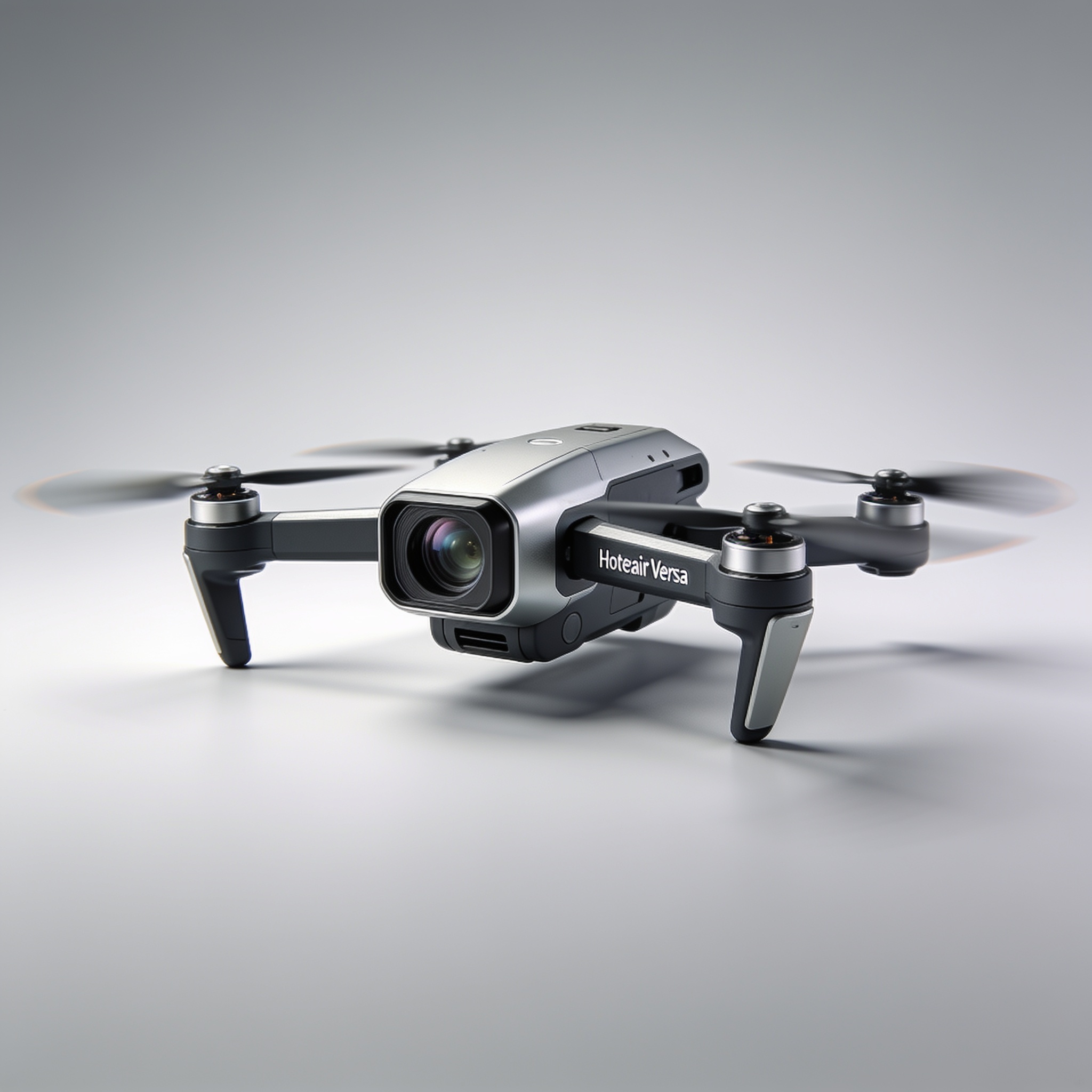
The HoverAir Versa represents an attempt to merge two distinct categories of consumer electronics into a single unit. Priced at $539 for the base handheld camera, it features a 1/1.3-inch sensor capable of recording 4K video at 60 frames per second. The device includes a 3-axis gimbal, 2x optical zoom, and 55GB of internal storage expandable via SD card.
Dual Functionality Design
The core concept involves attaching a magnetic flight kit to transform the handheld camera into a mini drone. In this configuration, the device utilizes downward sensors for position holding and supports palm takeoff and landing. Preset flight patterns include hover, follow, orbit, and a 3D world creation mode that generates VR-style models. However, the drone mode lacks obstacle avoidance sensors entirely.
In handheld mode, the Versa uses a 19mm equivalent lens with an f/2.0 aperture. The 1.64-inch display is described as practical but cramped compared to competitors like the DJI Pocket 4 or Insta360 Luna Pro. Video quality is sharp with smooth gimbal stabilization, though color balance has been noted as slightly warm indoors and oversaturated outdoors.
Regulatory Uncertainty and Availability
A significant factor affecting the product launch is regulatory status. Due to an FCC action, the Versa's drone feature faces unclear availability in the United States. This mirrors legal challenges previously encountered by other drone manufacturers operating in the region. While the handheld camera function may remain accessible, the drone capabilities are subject to the same restrictions that cleared shelves of competing products. Consumers outside the US, including those in Canada, retain access to the full kit.
Comparison to Competitors
As a standalone pocket camera, the Versa competes directly with the Insta360 Luna Pro and DJI Pocket 4. Both rivals offer superior specifications, such as larger sensors, higher resolution video options up to 8K, and more advanced slow-motion capabilities. As a drone, the Versa requires purchasing the additional flight kit, bringing the total cost to $649 for the bundle. This places it above the DJI Neo 2, which retails around $300, though the Neo 2 also lacks official US availability.
Despite these tradeoffs, the Versa offers a comprehensive accessory ecosystem at launch. Included items range from an ND filter kit and magnetic tripod to a tiny handheld controller. The device also supports external USB microphones with noise cancellation technology designed to mitigate propeller sounds during flight.
What it means
For creators who prioritize portability over maximum image quality, the Versa offers a unique value proposition by reducing the gear load required for both ground and aerial shots. Users must weigh the convenience of carrying one device against the performance benefits of dedicated cameras and drones.
Potential buyers in the United States face immediate uncertainty regarding the legality of flying the device. Until regulatory clarity is reached, the drone functionality may remain inaccessible despite the hardware being present. International users can utilize the full feature set immediately.
Do you prefer carrying separate devices for photography and videography, or would a hybrid solution like the HoverAir Versa simplify your workflow?