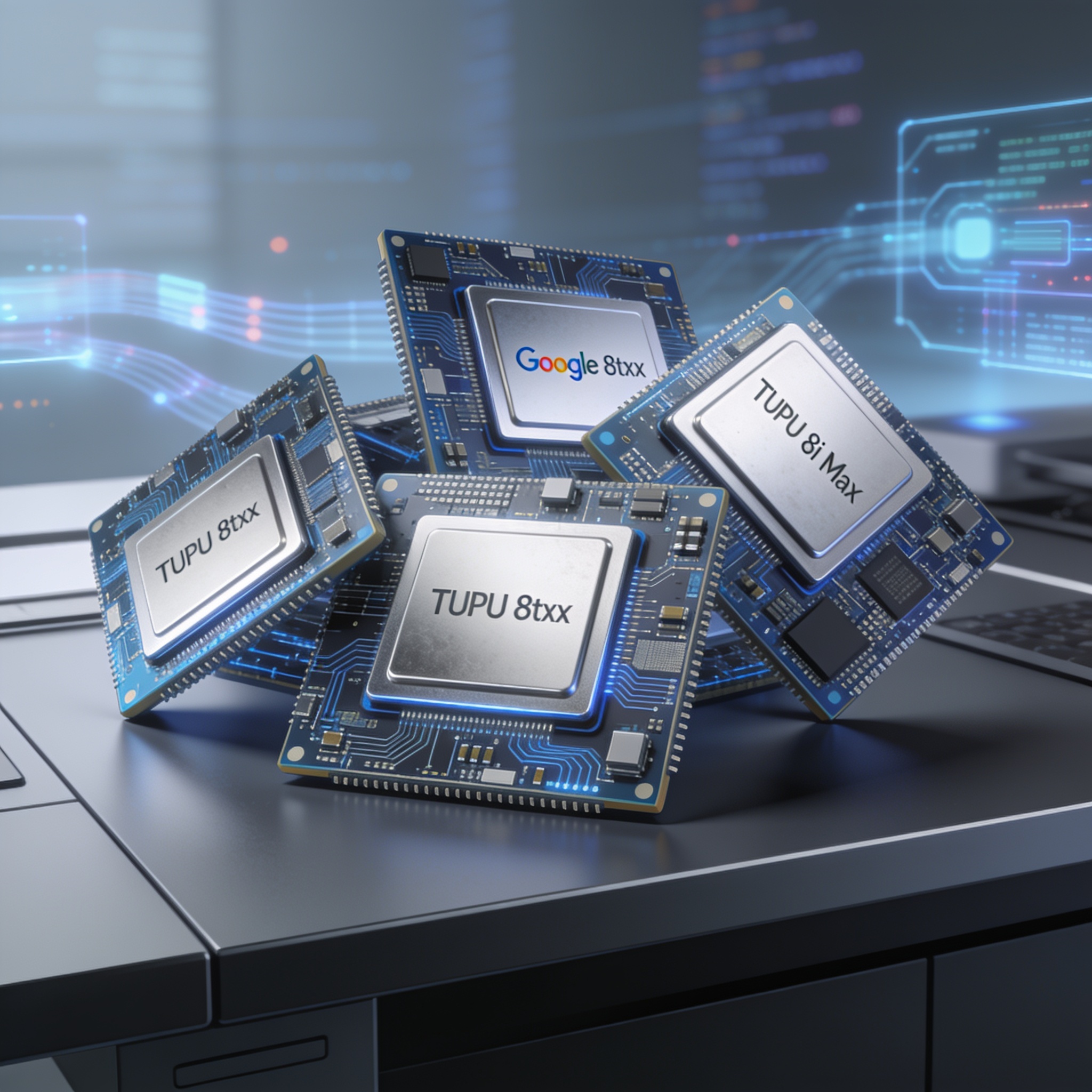
Google has officially introduced two new artificial intelligence chip systems designed to address distinct computational needs: the TPU 8tx and the TPU 8i Max. These releases mark the introduction of four different TPU architectures by the company within a single year.
The TPU 8tx is engineered specifically for organizations that require secure handling of sensitive data. It incorporates confidential computing features directly into the hardware, allowing data and internal model information to remain protected even while being processed. This capability targets enterprises and governments managing private information or subject to strict security compliance requirements. The system utilizes the same processing technology as the TPU 8t but integrates fifth-generation AMD EPYC processors and the Boardfly network. According to Google, this configuration delivers response times up to half that of the standard TPU 8t with negligible performance impact.
What it means
These launches provide specific solutions for companies facing conflicting demands between high-performance computing and data privacy. Organizations in sectors like finance, healthcare, or government can now process sensitive information without exposing it during computation. The TPU 8tx allows for training agents and adapting models using private data without transferring information between different server sets.
For developers working with large-scale data, the TPU 8i Max offers significant infrastructure efficiency. By combining two chips into a single physical structure, the system doubles processing capacity and memory resources while occupying the same rack space. This density allows data centers to install more computational power in limited areas. Additionally, new software tools like TorchTPU and TPU Sync aim to streamline development workflows and reduce data transfer times by over 90%.
Google states that nearly 100 clients already utilize its TPU processors, including laboratories, retailers, universities, and financial firms. The company also employs AI tools such as AlphaChip and Gemini to accelerate the development of its own hardware. With the Cloud Pathways tool now generally available on Google Kubernetes Engine, coordinating multiple TPU sets as a single machine has become more accessible for tasks requiring massive processing power.
Do you believe hardware-level data protection will become a standard requirement for your organization's AI applications?