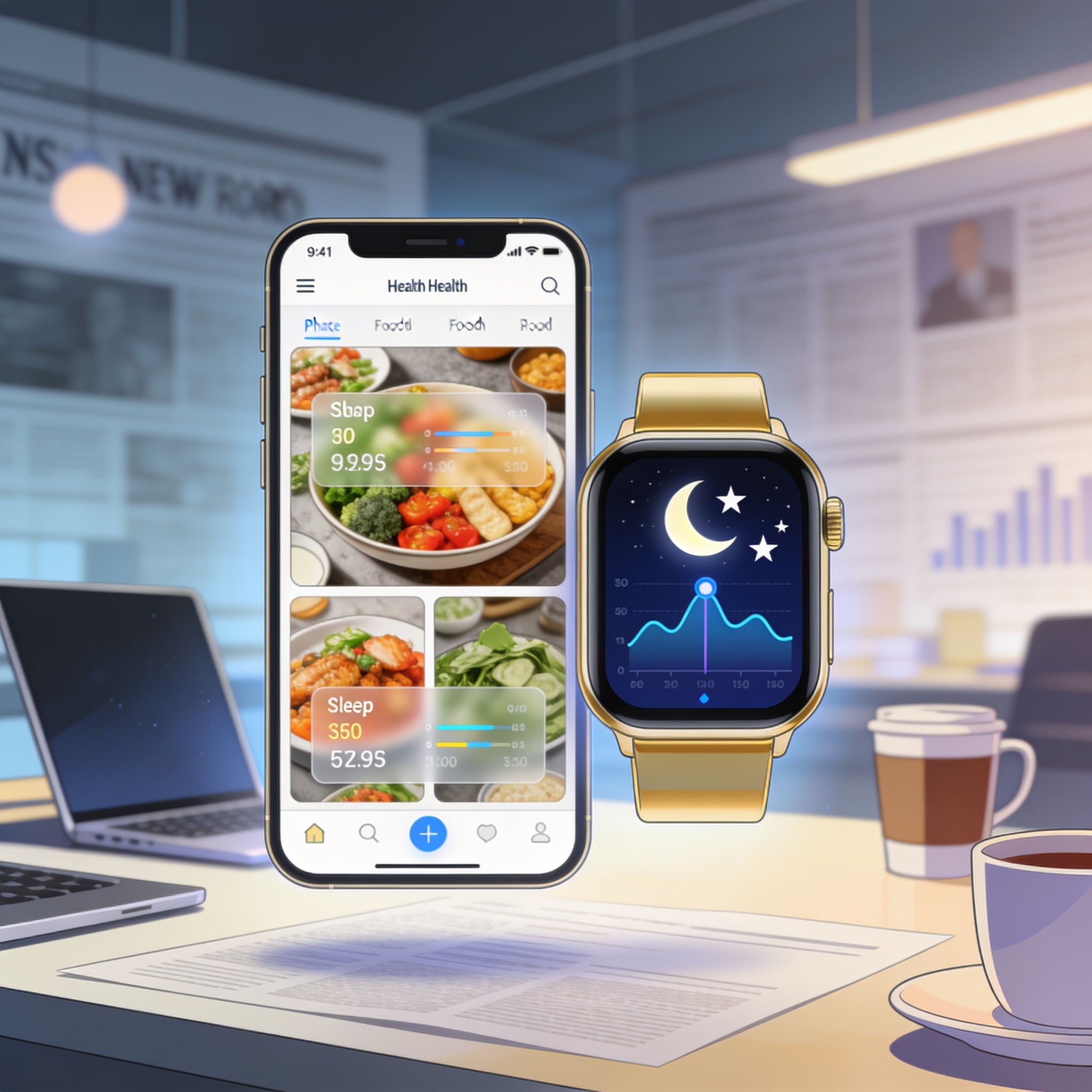
Google has updated its Health app to include advanced food tracking capabilities available through the Google Health Premium subscription tier. The new features aim to simplify how users monitor their diet and understand its impact on overall health.
The Nutrition section within the Health tab provides users with data on calorie targets based on personal metrics such as gender, age, height, weight, and average activity levels. Users can view both caloric burn and intake figures. Caloric burn is calculated automatically using steps, activity, and heart rate data logged from companion trackers like Fitbit or Google Pixel smartwatches.
Logging meals requires minimal effort through several methods. Users can tap a plus sign, select the Log button under the daily summary, or choose Food & Drink from customizable tabs. A voice assistant named Ask Coach allows users to dictate meal details by typing or speaking. For example, a user can describe a meal verbally as "I had a coffee, banana, and coconut yogurt."
A barcode scanner enables ingredient-level tracking for packaged items. The most efficient option involves taking a photo of the meal. The app identifies the dish and calculates nutritional data from ingredients. Users may also photograph packaged goods like cereal boxes or protein bars to retrieve nutritional information instantly. Any discrepancies can be manually adjusted, such as specifying light dressing on a salad or noting partial portion consumption.
What it means
This update positions Google Health as a more comprehensive wellness tool rather than just a step counter. By integrating visual meal logging with biometric data from wearables, the app attempts to close the gap between what users eat and how they feel physically.
Users who subscribe to Google Health Premium will gain access to these analytics without needing third-party applications like MyFitnessPal. The ability to correlate caffeine or heavy late-night meals with poor sleep patterns offers actionable insights for those trying to optimize rest and recovery.
However, the accuracy of photo-based identification remains dependent on the app's database. Users must still exercise diligence in logging every item consumed, including snacks and beverages, to ensure data reliability. Whether the system correctly interprets complex dishes or homemade meals without clear packaging is not yet confirmed.
Do you find manual food logging too time-consuming, or would you trust a photo-based system to track your daily intake accurately?