CNET has completed battery testing on foldable phones released in 2026, revealing that modern devices no longer require users to sacrifice endurance for versatility.
The publication reviewed five book-style foldables: the Samsung Galaxy Z Fold 8, Z Fold 8 Ultra, Motorola Razr Fold, Google Pixel 11 Pro Fold, and the Apple iPhone Duo. Testing involved a 3-hour streaming video test and a 45-minute endurance test combining video playback, social media scrolling, gaming, and video calls on the inner screens.
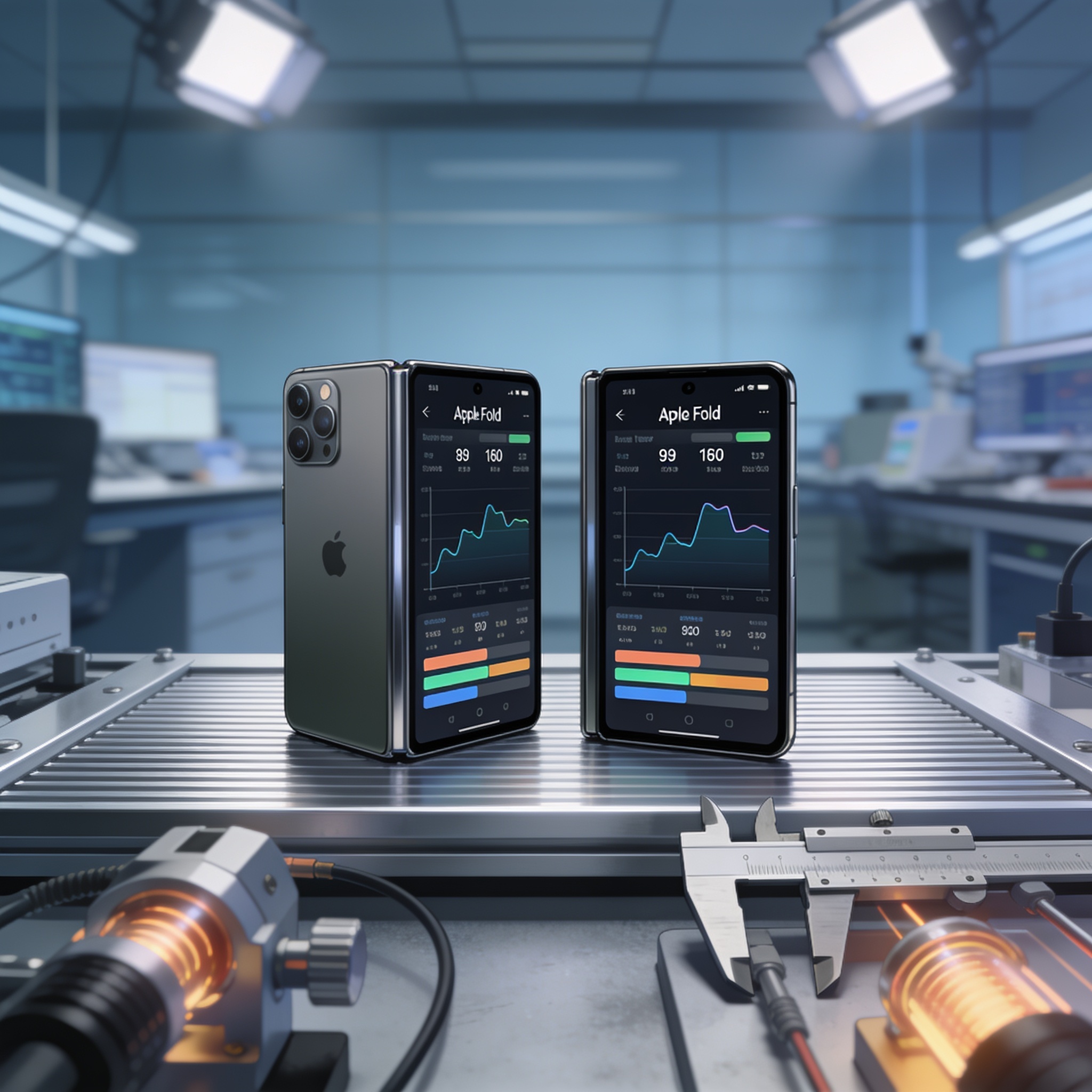
The Apple iPhone Duo secured the top position with an average score across both tests. It finished the endurance test with 99% remaining charge and ended the streaming test at 84%. The device uses a dual-cell battery design and the A20 Pro chip to achieve these results despite having a 4,883-mAh capacity.
Motorola's Razr Fold placed second among book-style phones with a 6,000-mAh silicon-carbon battery. Samsung's Galaxy Z Fold 8 and Z Fold 8 Ultra followed closely, measuring just 4.5 mm and 4.1 mm thick respectively when unfolded. Google's Pixel 11 Pro Fold rounded out the group with a 4,806-mAh battery.
In the clamshell category, CNET evaluated three Motorola Razr variants and the Samsung Galaxy Z Flip 8. The baseline $800 Motorola Razr took the lead with a 4,800-mAh battery, outperforming the $1,500 Razr Ultra in the streaming test while tying it in endurance.
All tested devices utilize high-density silicon-carbon batteries, allowing manufacturers to pack more capacity into thinner chassis designs. Results indicate that while all foldables handle short bursts of activity well, prolonged video streaming impacts battery life more noticeably than mixed usage.
When ranked against all smartphones tested by CNET this year, including non-folding options, the iPhone Duo sits among the top five performers overall.
What it means
Consumers considering a foldable phone no longer need to worry about finding a model that lasts less than a full day. The shift to silicon-carbon batteries has closed the gap between foldable and traditional slab phones regarding daily endurance.
Users who prioritize screen real estate will find the book-style options offer comparable battery performance to compact flip designs, though the smaller displays on clamshells naturally consume less power. Price remains a differentiating factor, as the top-performing iPhone Duo costs $1,999 compared to the $800 entry-level Razr.
While battery life is no longer a dealbreaker, other factors such as camera quality, durability, and software experience will likely influence purchasing decisions. The technology has matured enough that foldables are practical daily drivers rather than novelty items.
Do you plan to switch from a standard smartphone to a foldable based on improved battery performance, or do you prefer the reliability of a traditional slab design?