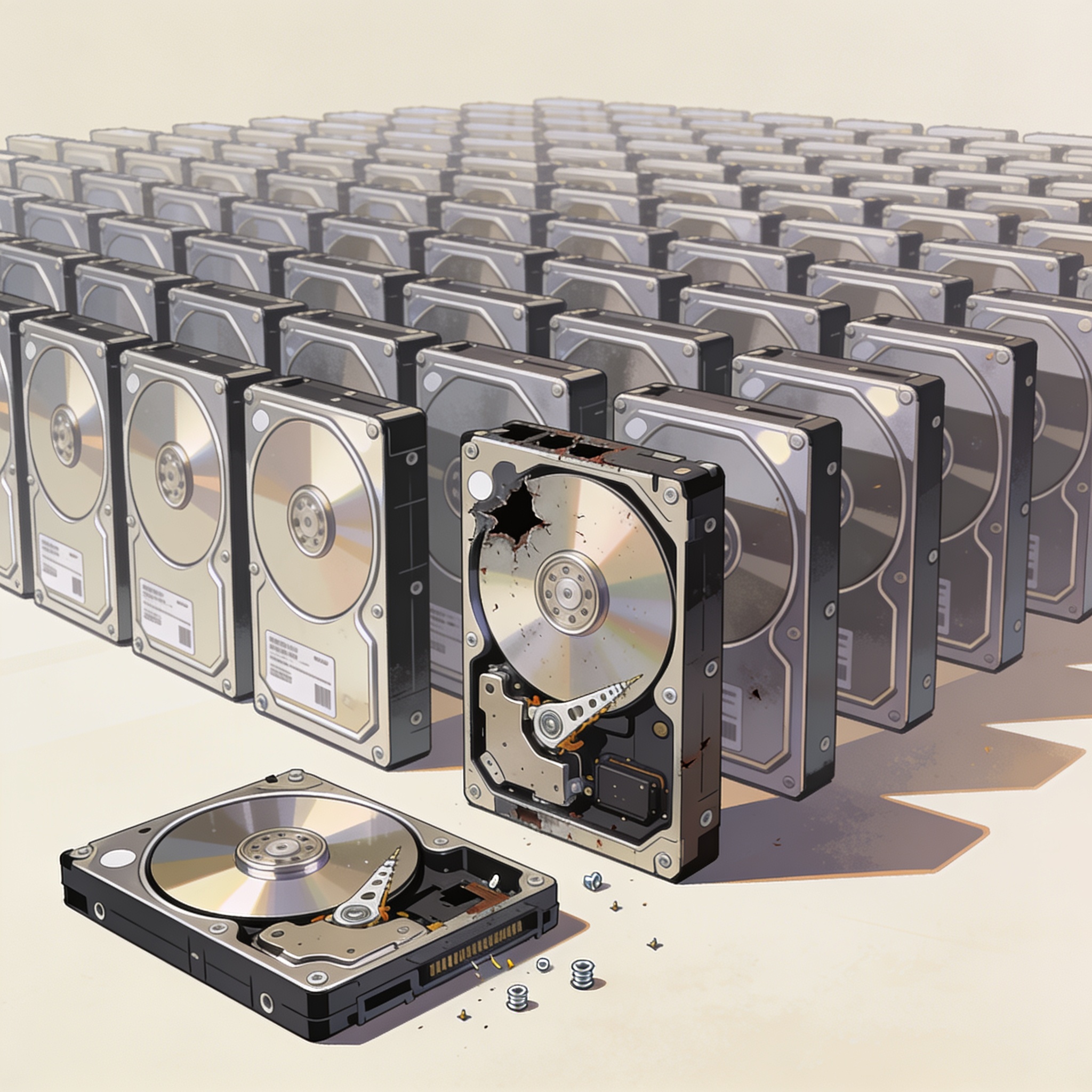
A comprehensive study involving a sample of more than 5,000 hard disk drives (HDDs) has highlighted persistent mechanical risks associated with traditional storage technology. The data, drawn from cloud storage provider Backblaze and confirmed by Secure Data Recovery, shows that while HDDs remain popular due to their low cost per gigabyte, they suffer from unpredictable failure rates.
Roughly 1.5% of all HDDs fail according to Backblaze statistics derived from managing a fleet of over 350,000 drives. Nearly half of these failures occur during the first year of operation. Furthermore, 30% of the failed drives break down without providing any advance warning to users or system administrators.
Secure Data Recovery reported an average lifespan of 807 days for the specific drives they analyzed, though this figure reflects only units that had already failed. Common causes for these failures include production defects such as head misalignment or seized motors, physical accidents like power surges or drops, and damage to internal operating systems.
What it means
The findings suggest that relying solely on local hard drive storage carries inherent risks regarding data integrity and longevity. Users who depend on HDDs for high-capacity storage must plan for replacement schedules, particularly as drives approach seven years of age when failure rates tend to increase.
While solid-state drives (SSDs) offer greater durability and speed, the cost advantage of HDDs remains significant for large-scale storage needs. This economic reality often leads organizations to build RAID systems using multiple drives rather than investing in single high-capacity SSDs. However, the mechanical nature of HDDs means that even redundant arrays face potential simultaneous failure risks if not properly managed.
Experts recommend combining cloud, local, and off-site storage solutions to mitigate the risk of theft, fire, and mechanical failure. Monitoring drive conditions and maintaining supplemental storage backups are essential practices for anyone utilizing this technology.
Do you currently rely on hard disk drives for your primary storage, and do you have a backup strategy in place?