Technology manufacturers are launching a wave of artificial intelligence-enabled hardware specifically targeted at remote workers and home office setups. The new products focus on automating routine tasks such as note-taking, meeting transcription, video call management, and physical activity monitoring.
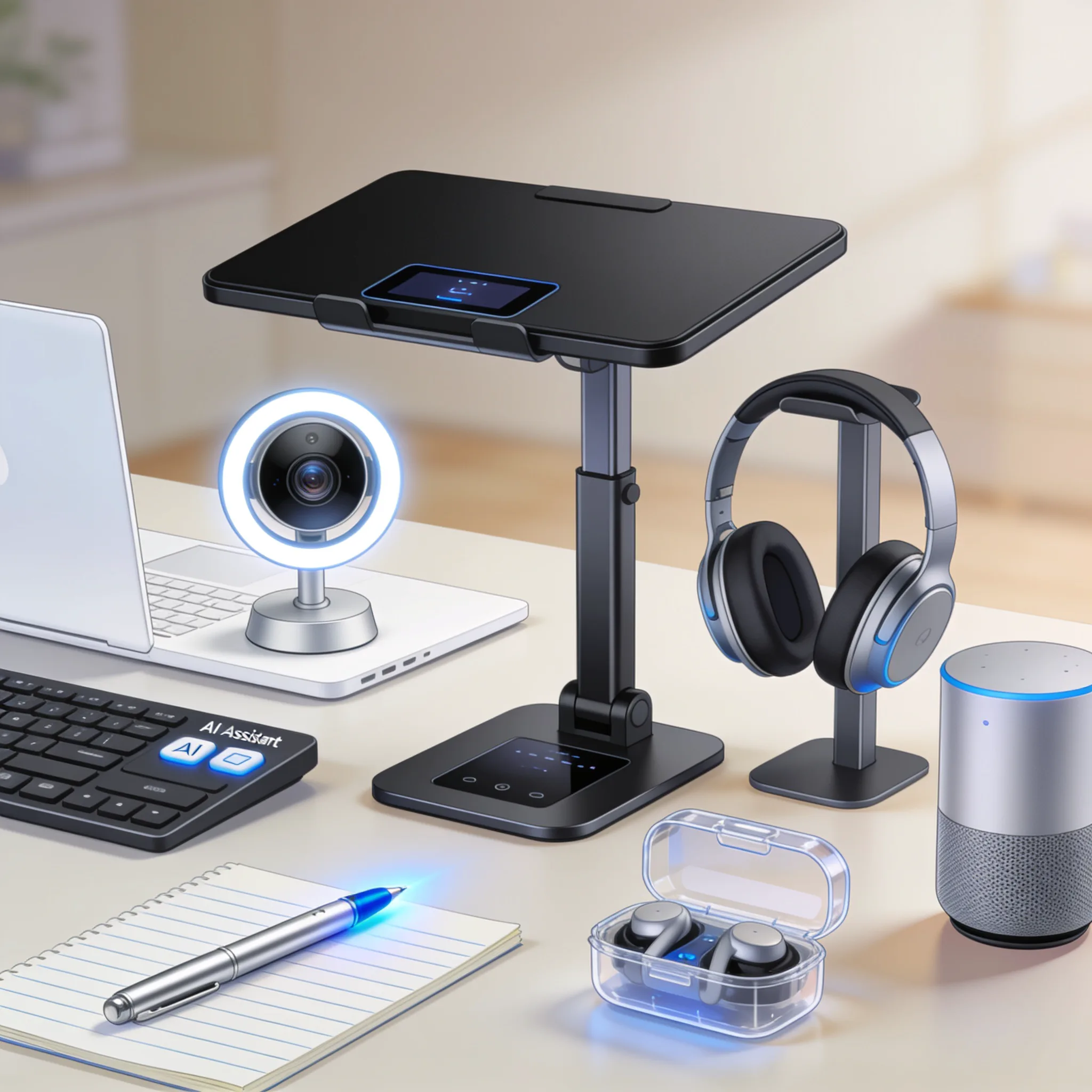
Flowtica has introduced the Scribe Pen, priced at $159, which combines traditional writing with audio capture. Users can take handwritten notes while the device records sound simultaneously. Afterward, the integrated AI transcribes the conversation, summarizes key points, generates to-do lists, and allows users to query specific details from the meeting without replaying the entire recording. The pen features 32GB of storage, identifies up to 15 speakers, and supports 92 languages.
Anker released the Soundcore Work, a coin-sized recording pin available for $159, though currently discounted to $99 during Black Friday sales. The device offers eight hours of battery life on a single charge and extends to 32 hours with its charging case. It captures audio within a five-meter range and uses companion app software to organize recordings into summaries. Monthly free transcription is capped at 300 minutes, with optional annual subscriptions available for higher limits.
Logitech launched the MX Keypad ($99) to provide physical access to digital tools. The device features programmable buttons that launch AI assistants or productivity applications with a single press. Compatible software includes GitHub Copilot, Claude Code, Microsoft Teams, Notion, Slack, Photoshop, Zoom, and Figma.
Amazon updated its Kindle Scribe Colorsoft line with a version starting at $479 that adds color display capabilities. The device targets professionals and students who annotate documents digitally. AI features assist in cleaning up messy handwriting, straightening highlights, summarizing notes, and searching across saved entries to find connections between different ideas.
Insta360 introduced the Link 2 Pro webcam for $249, reduced to $199 for Black Friday. This 4K camera utilizes intelligent tracking to follow user movements automatically, keeping individuals in frame even when they shift positions between sitting and standing. It also supports group tracking for team meetings and includes AI noise cancellation to filter background sounds.
Autonomous unveiled the Desk Pro, an adjustable standing desk priced at $499. Built-in sensors monitor user activity throughout the day and prompt reminders to stretch or change positions. The system tracks time spent sitting versus standing and allows users to query data about their daily habits or room CO2 levels.
What it means
These products represent a shift toward hardware that actively manages workflow rather than simply displaying information. For remote workers, the immediate benefit lies in reducing administrative overhead; automated transcription and note organization save time previously spent on manual entry. Video call automation removes the need to constantly adjust framing, allowing presenters to focus on content rather than equipment.
However, reliance on these devices introduces dependency on proprietary ecosystems and subscription services. Several products require monthly fees for full functionality, such as extended transcription limits or advanced AI features. Privacy concerns may also arise given that microphones, cameras, and biometric sensors are continuously active in personal workspaces.
Users should consider whether the convenience of automation outweighs the cost of recurring subscriptions and the potential risks associated with always-on recording devices. The effectiveness of these tools depends heavily on individual work habits and the specific requirements of their professional roles.
Would you trust an AI-powered pen or webcam to handle your sensitive work conversations, or do you prefer manual control over your recording devices?