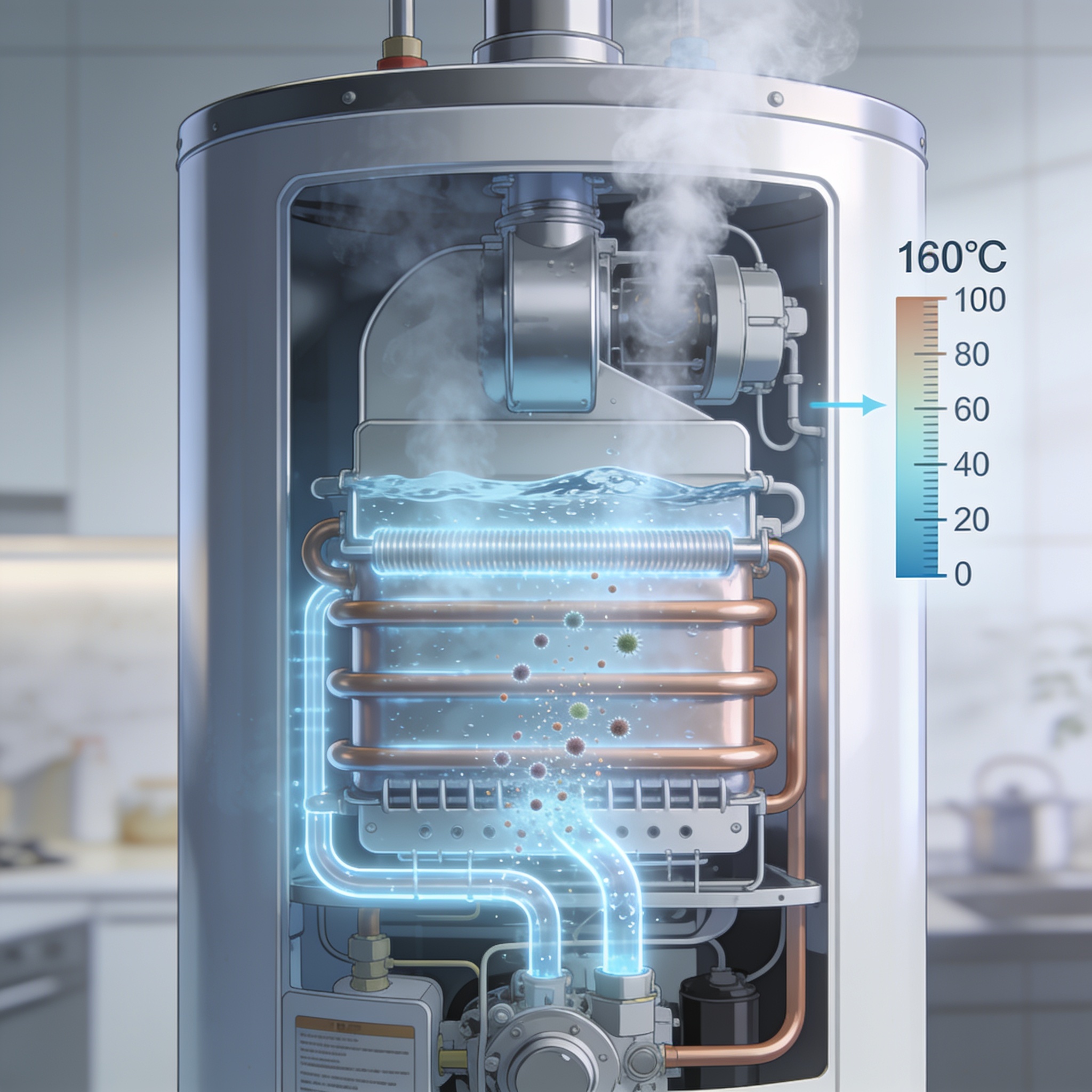
A new water heater concept from NIST uses heat exchangers in an unmixed configuration to push tank temperatures up to 160°F to suppress Legionella bacteria, while cooling the outgoing hot water to safe levels for users. Legionella thrives in warm water, so maintaining higher tank temperatures can prevent pathogen growth behind the scenes, with safety concerns addressed by the unmixed exchange that keeps incoming cold water from mixing with hot water.
The design draws inspiration from HVAC and refrigeration technology, where unmixed heat exchangers are used to manipulate heat cycles. NIST engineer David Yashar explains that this simple arrangement raises the water temperature enough to deter bacteria and then reduces it to safe levels before delivery. Beyond safety, the process can recapture some waste heat and potentially improve the efficiency of cold-water heating.
Questions remain about market readiness. A patent does not guarantee quick deployment; manufacturing licenses and engineering for consumer products will determine how soon such heaters could reach homes. Retrofit feasibility is also uncertain, as retrofitting would require added insulation to manage increased standby losses if the tank is heated to higher temperatures.
In summary, the concept demonstrates a path to safer domestic hot water through a novel use of existing heat-exchanger technology, with practical adoption contingent on licensing and product development.