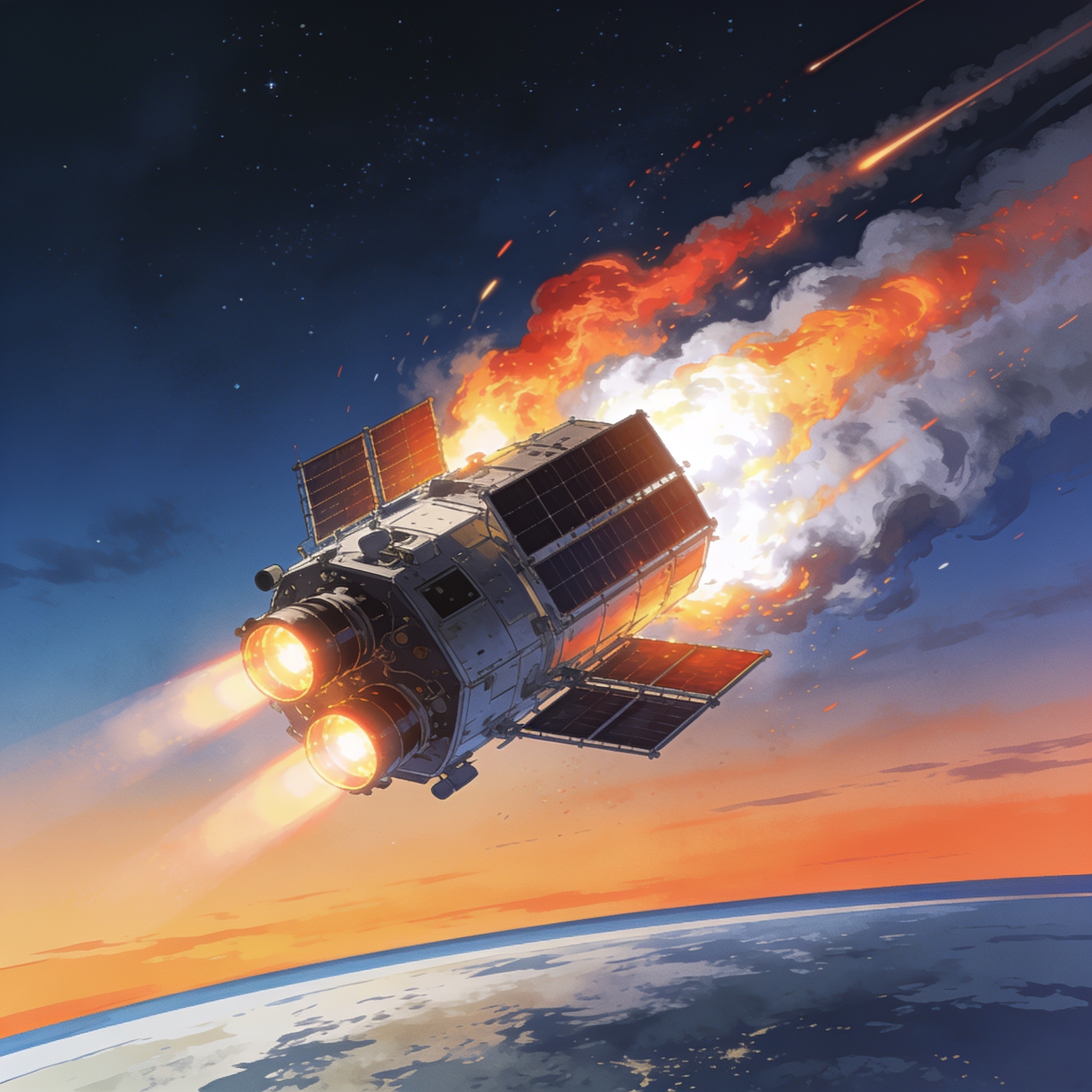
The Neil Gehrels Swift Observatory is set to reenter Earth's atmosphere this week, marking the end of a 22-year mission that vastly outlasted its intended lifespan. Originally launched on November 20, 2004, the space telescope was designed for a two-year primary mission but remained operational for more than ten times that duration.
NASA expects the observatory to hit the atmosphere on November 4 at approximately 3:30 a.m. ET, though the agency acknowledges an 11-hour window during which reentry could occur. The exact timing determines where any surviving fragments might land. NASA states that components capable of surviving reentry are limited to a band between 20.6 degrees south latitude and 20.6 degrees north latitude.
Most of the telescope is expected to burn up completely during atmospheric entry. According to NASA, the risk of harm to anyone on Earth is unlikely, estimated at approximately 1 in 2,100. The agency and the Space Force will continue monitoring the reentry and updating predictions as the event approaches.
Operations were shut down in late October after the final observation on October 20. At that point, the observatory was orbiting at just 171 miles above Earth, where increased atmospheric drag prevented further work. A planned rescue attempt over the summer of 2026 was abandoned due to engineering difficulties and control issues.
During its lifetime, Swift scanned over 2,000 gamma-ray bursts, captured 1.5 million images, and transmitted 12 TB of data. This information contributed to an estimated 7,000 research papers. The observatory helped advance understanding of phenomena including black hole formation and the early universe history.
In January 2018, the telescope was renamed from the Swift Gamma-Ray Burst Explorer to the Neil Gehrels Swift Observatory in honor of the pioneering NASA astrophysicist who died in 2017. John Nousek, director of mission operations for Swift, described the situation as a sad time for the Penn State Mission Operations Center team that managed the project for 22 years.