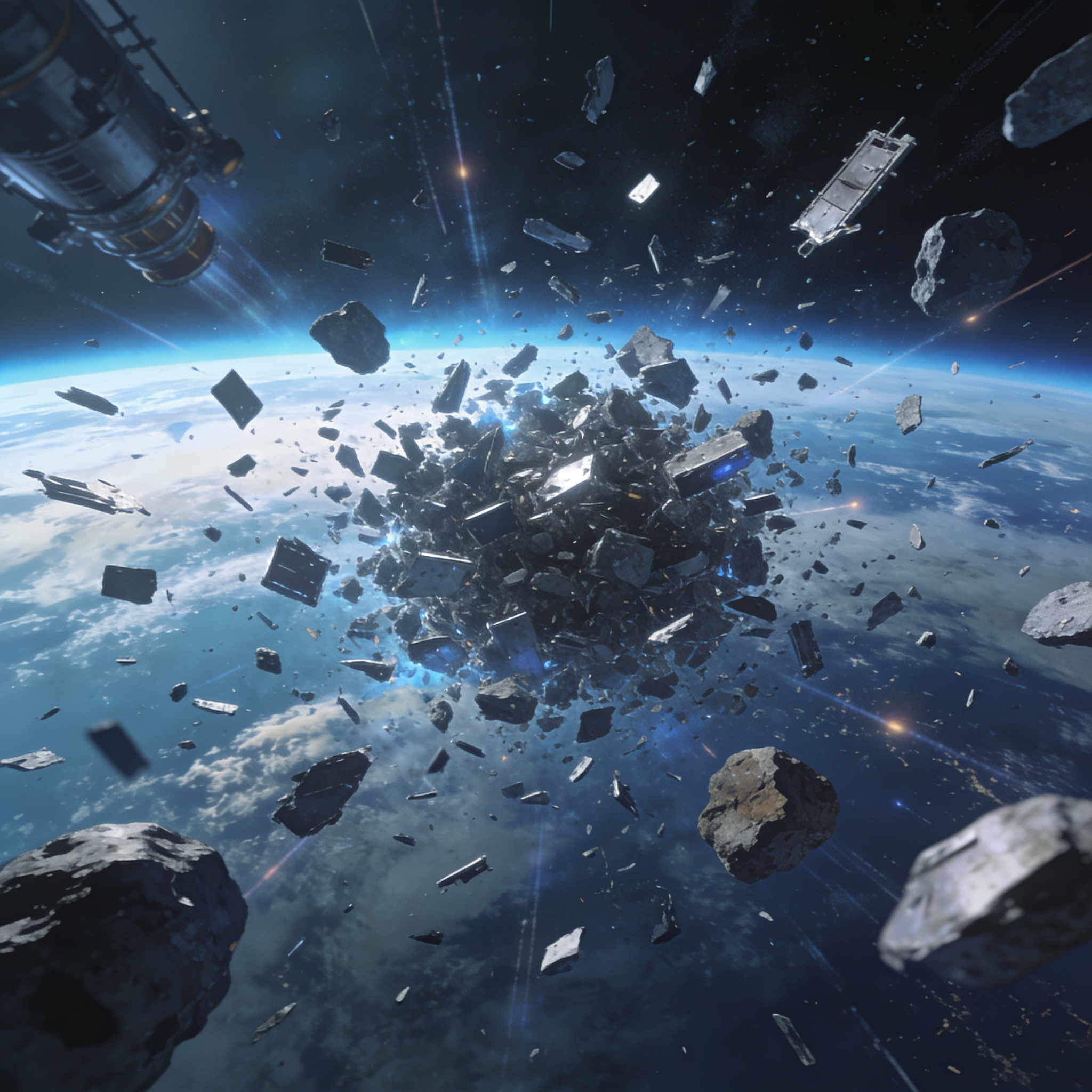
More than 30,000 pieces of space debris are tracked in Earth’s orbit, according to a Space Environment Report. The growing cloud of fragments travels at high speeds, threatening satellites and human missions. Experts warn that collisions can generate thousands of new fragments, creating a cascading effect that could disrupt global communications networks and future space exploration.
Origins of the problem trace back to decommissioned rockets and satellites left in orbit after operation ends. Fragmentation from accidental and unforeseen collisions adds to the debris population, complicating monitoring efforts and raising costs for international agencies to catalog and track objects.
The so-called Kessler Syndrome describes a potential saturation of low-Earth orbit with debris, turning it into a high-risk belt of fragments that could jeopardize essential satellites, climate monitoring equipment, and launches. While this scenario is theoretical, it emphasizes the need for proactive measures to preserve orbital access for science and commerce.
debris sizes range from paint flakes and small metal fragments to large inactive rocket stages. Smaller pieces are harder to track with ground-based radars, yet they can release kinetic energy comparable to small explosive events upon impact. Governments and space agencies are pursuing removal technologies, such as magnetic nets or robotic捕 grabbing systems, but political and funding hurdles slow progress.
One approach to sustaining orbital operations involves designing payloads for controlled reentry at end of life, reducing long-term debris. Engineers also advocate applying circular-economy principles to space hardware and pursuing regulations to govern future launches and decommissioning practices.
The ongoing debate underscores that addressing orbital debris requires a combination of advanced technology, coordinated policy, and sustained investment to minimize risk to Earth observation, weather forecasting, and communications infrastructure.


Leave a comment
Your comment appears after you verify your email. We replace % $ { } [ ] < > with periods and display the text safely.
Published comments (0)
No comments yet. Start the conversation.