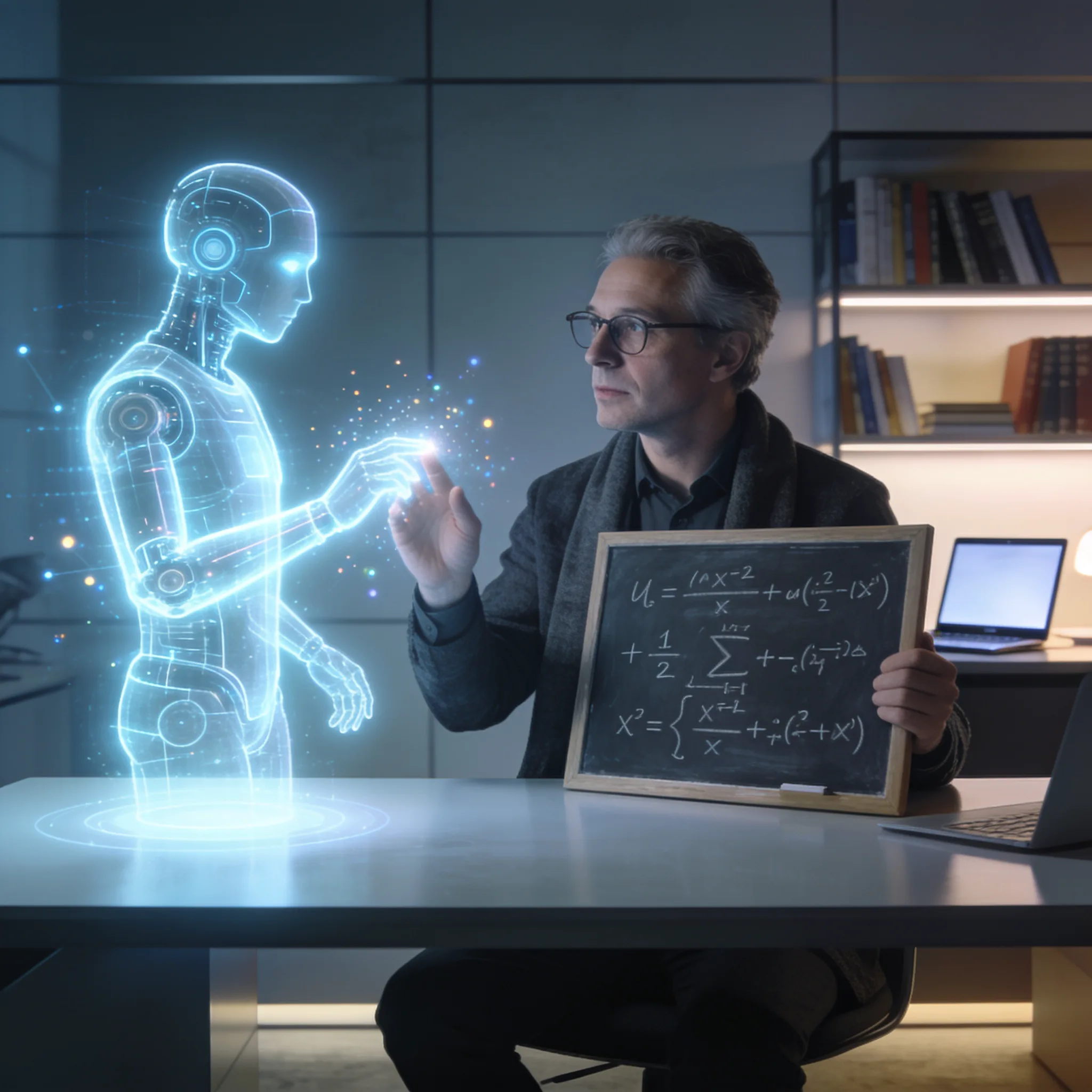
Mathematician Levent Alpöge from Anthropic states he has proved the Riemann Hypothesis with assistance from the artificial intelligence system Claude. This assertion places the mathematical community at a critical juncture regarding the integration of AI tools into rigorous proof construction.
The Riemann Hypothesis, formulated in 1859, concerns the distribution of prime numbers and their relationship to the zeros of a specific mathematical function. It is one of the seven Millennium Prize Problems administered by the Clay Mathematics Institute, each carrying a reward of US$1 million. Official recognition requires publication followed by at least two years of analysis and general acceptance by the international mathematical community.
Alpöge published a document on his website claiming the arguments were formalized without assumptions in Lean, a proof assistant software. He also stated that the method resolves the generalized Riemann Hypothesis and could potentially extend to the extended version with further work. According to the report, Alpöge sent a message to Anthropic CEO Dario Amodei on Sunday evening to communicate the discovery.
The document suggests Alpöge delayed publication until after Anthropic's initial public offering on Thursday. However, Anthropic did not participate in the announcement or comment on the allegation. In August, the company indicated it was working on the Riemann Hypothesis with Claude but declared it did not expect the system's techniques to lead to a demonstration of the problem.
What it means
The mathematical community faces immediate challenges in verifying this claim through independent peer review. If confirmed, the result would represent a significant milestone in both mathematics and artificial intelligence capabilities. However, the absence of independent validation means the proof status remains uncertain pending scrutiny by other experts.
Researchers must now evaluate whether AI-assisted proofs meet traditional standards for mathematical rigor. The situation highlights the growing need for institutions to reconsider evaluation criteria as AI systems produce increasingly complex results. Human judgment remains essential to distinguish genuinely relevant discoveries from those that may be technically correct but offer limited insight.
This development follows similar controversies involving OpenAI's claimed solutions to other mathematical problems, including Navier-Stokes equations and conjectures related to Paul Erdős. Those cases involved accusations regarding research practices and raised questions about how AI-generated results should be treated within academic frameworks.
Will you trust an AI-assisted mathematical proof if verified by peers, or do you believe human-only verification is necessary for such monumental claims?