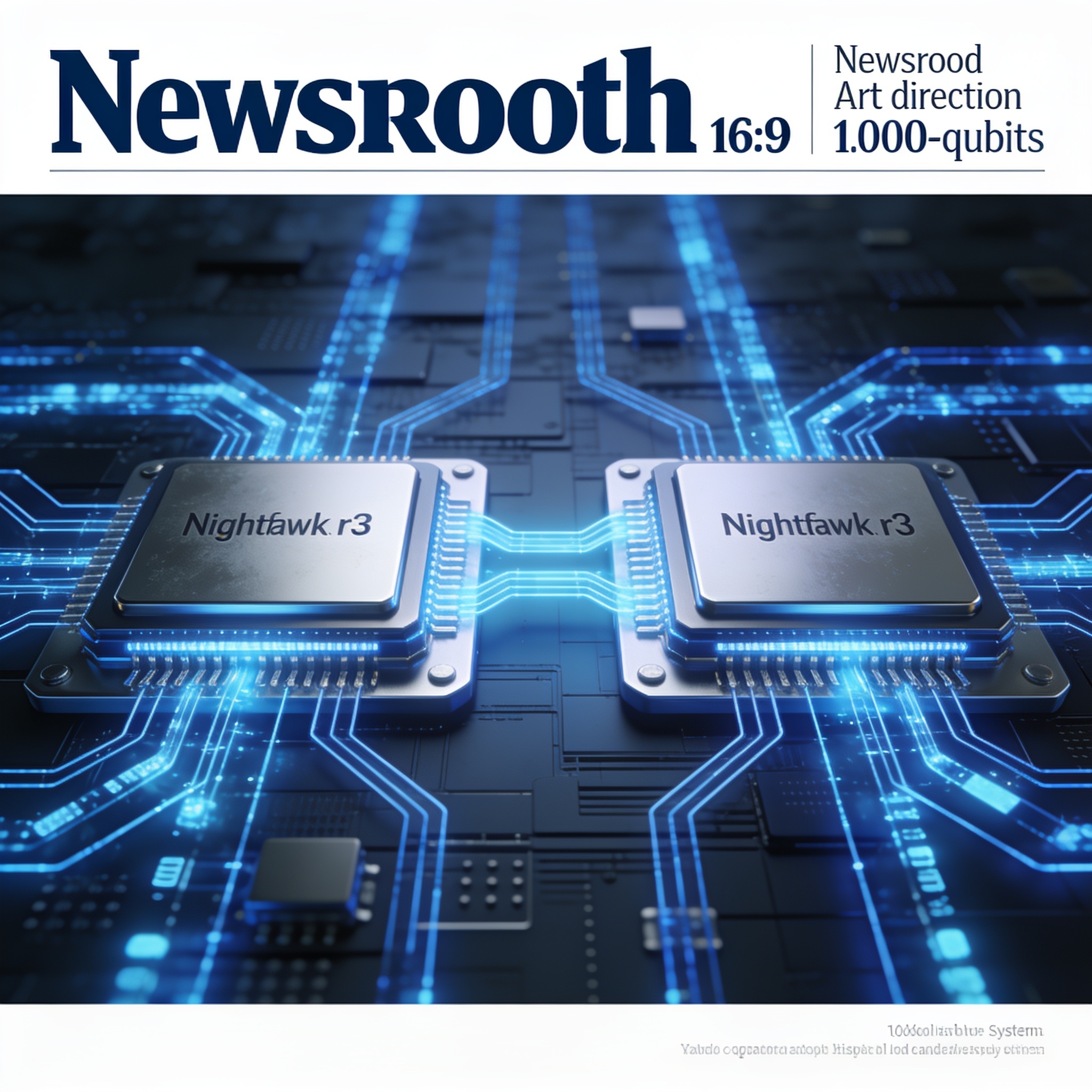
IBM announced Wednesday that it plans to build a quantum computer with more than 1,000 qubits by 2027 through linking two next-generation Nighthawk r3 chips. Each chip will contain 520 usable qubits capable of running 10,000 quantum operations, connected via ten dedicated connectors.
The current Nighthawk r2 chip launched in September and can produce up to 100,000 results per second on 120 qubits. IBM says customers and partners have run 34 billion programs on the existing hardware, achieving speedups of up to 19x compared to earlier Heron chips. German energy firm E.ON reported a 15x speedup when optimizing power grids.
Scaling Challenges
Linking chips represents one of the hardest scaling problems in quantum computing. IBM has previously linked Nighthawk chips at 99.3% accuracy, falling short of its 99.9% goal. Jay Gambetta, director of IBM Research, stated that useful quantum computing hinges on delivering results with both accuracy and speed.
Each run of a quantum program produces only one result, meaning useful work often requires millions or billions of runs. This makes processing speed as critical as the total qubit count.
Strategic Moves
IBM continues hedging its technology bets beyond the Nighthawk line. The company agreed to buy HRL Laboratories, which builds silicon qubits, in July. In October, DARPA moved IBM to the final stage of its quantum testing programme. Rival Quantinuum raised $1.68B in its June IPO.
IBM still aims to deliver its first error-corrected quantum computer, named Starling, by 2029 according to reports from last year. All performance figures come directly from IBM and its partners.
What it means
The proposed 1,040-qubit system would represent a significant step forward in quantum computing scale, potentially enabling more complex calculations for industries like energy optimization and materials science. However, the path to reliable operation remains uncertain given previous accuracy rates fell short of goals.
Customers currently using Nighthawk r2 may see benefits from faster processing speeds, but widespread adoption depends on whether IBM can achieve the necessary accuracy levels when combining multiple chips. The practical timeline for commercial availability extends several years out.
What experience do you have with quantum computing tools or services, and how confident are you in their reliability for real-world applications?