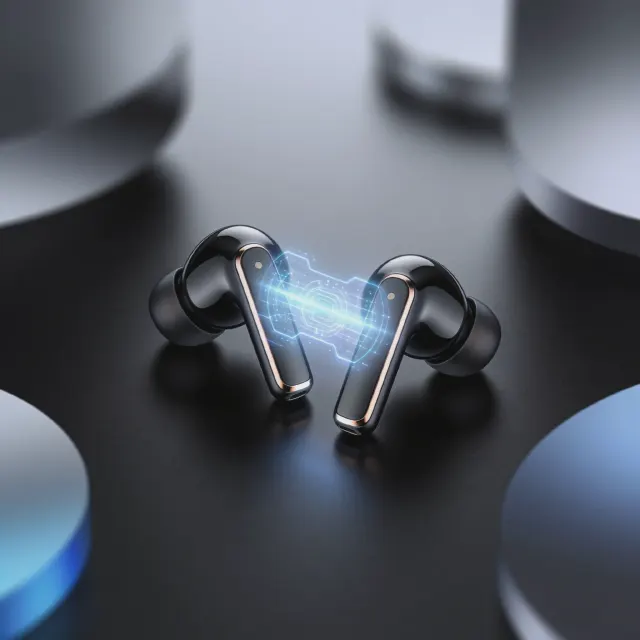
The Bluetooth Special Interest Group announced a major revision to the Bluetooth Core 7.0 standard on Thursday. The update introduces Bluetooth High Data Throughput, a flagship feature designed to significantly accelerate wireless data transfer for compatible devices.
Technical Improvements
The new standard pushes maximum bit rates to 7.5 Mbps, effectively quadrupling the throughput of the existing LE 2M technology. This speed increase stems from a new physical layer for Bluetooth, which serves as the foundational bedrock for transmitting and receiving data signals. New modulation schemes allow this layer to handle data more efficiently and transmit larger amounts of information simultaneously.
These efficiency gains also promise better battery performance. Devices such as smart locks, earbuds, and wearables may require less frequent charging or battery replacement due to reduced energy consumption during data transmission.
Real-World Applications
Damon Barnes, Director of Technical Marketing at the Bluetooth Special Interest Group, outlined several practical use cases for the technology. A smartwatch could sync hours of sensor-rich training data to a phone in seconds. Smart home products might complete firmware updates with minimal visible downtime.
Audio applications stand out as an early beneficiary. The additional capacity supports richer experiences, including high-resolution, lossless, surround, and spatial audio. Spatial computing and local AI device communication represent other potential areas for growth.
Market Rollout Timeline
Compatible devices are slated to hit store shelves starting in 2027. While the exact launch date remains unspecified, the rollout will begin with wireless audio products like headphones, earbuds, and speakers. Other sectors, including health wearables and smart home applications, will likely follow as manufacturers adopt the new protocol.
Adoption timelines for protocol changes often span years, meaning widespread availability across all device categories may take time. Manufacturers may prioritize premium wireless products before expanding to broader markets.
What it means
For consumers, the immediate impact is limited until 2027, but the shift signals a significant leap in wireless connectivity capabilities. Users with current Bluetooth devices will not see these benefits immediately, as hardware upgrades are required to support the new standard.
The focus on audio first suggests that music listeners and podcast enthusiasts will be among the earliest beneficiaries. Faster data transfer could enable higher quality streaming without compression artifacts and quicker syncing of large media libraries.
Uncertainty remains regarding how quickly manufacturers will integrate the technology into mid-range and budget devices. Until then, most users will continue relying on existing Bluetooth standards for everyday tasks.
Will you wait for Bluetooth Core 7.0 enabled devices, or do your current gadgets meet your needs?