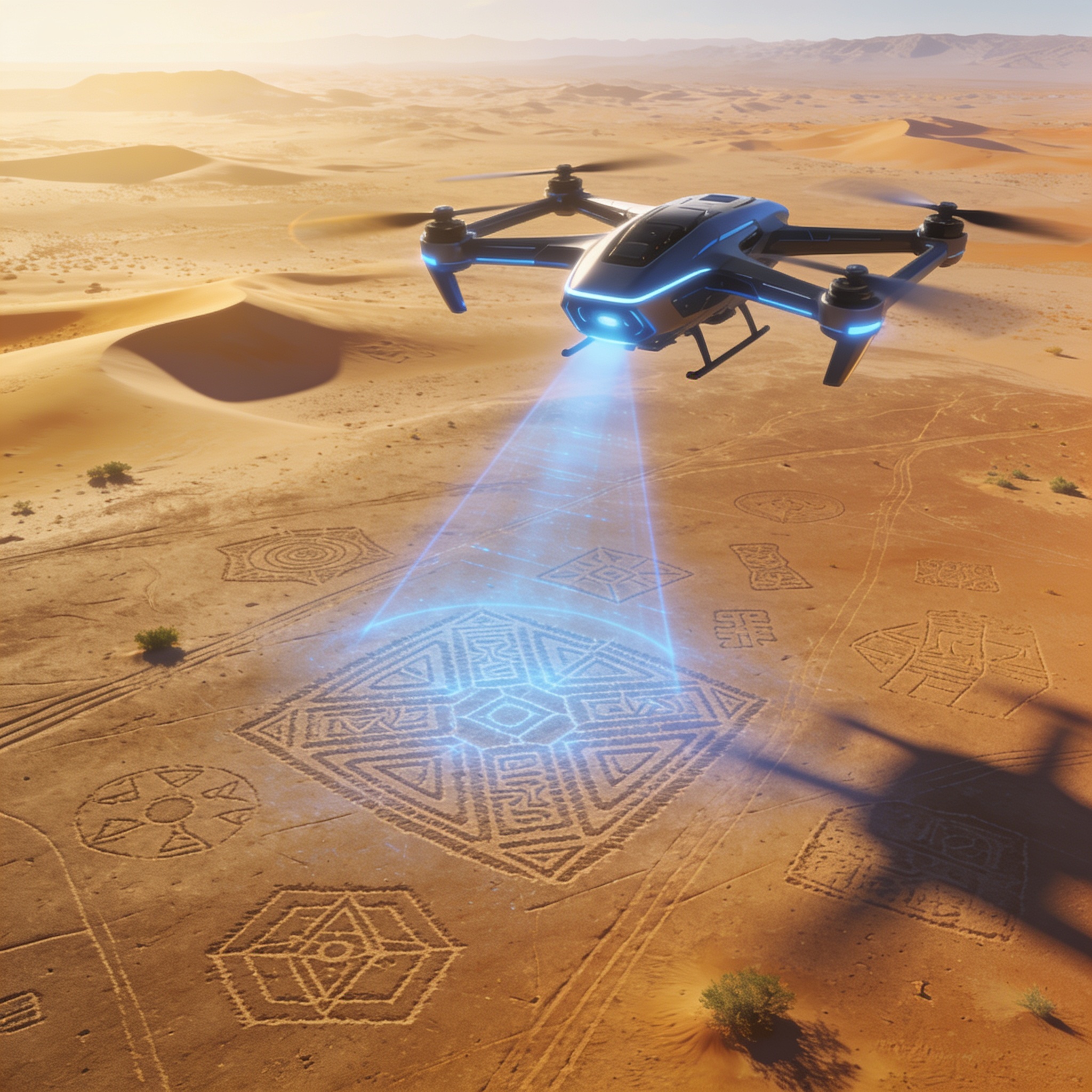
A team of researchers has identified 303 new geoglyphs in the Peruvian desert using artificial intelligence, nearly doubling the number of known figures after a century of traditional research. The study, which utilized machine learning algorithms and satellite data, was recorded in 2024 and reported by Olhar Digital.
The project combined advanced technology with field verification. Drones captured high-resolution photographs of the vast plain, while computational filters located anomalies in contrast and relief on the ground. Historians then walked the suggested routes to document the contours physically, ensuring the images were not optical illusions caused by wind erosion.
What the Figures Represent
The newly discovered geoglyphs include silhouettes of humans, domesticated camelids, and even decapitated heads. These findings expand the understanding of the ancient civilization that created them. The shapes range from anthropomorphic figures to complex geometric lines that cross entire valleys.
Experts note that many markings illustrate ceremonies, highlighting the cultural identity embedded in this monumental art. The collection also features representations of felines, seabirds, and Andean camelids alongside non-figurative abstractions carved into the rocks.
Why Technology Arrived Late
Tracking these giant drawings historically proved difficult due to the extreme geographic expanse and thermal weather conditions of the sandy desert. Traditional investigative models required massive capital investment, making periodic expeditions to update remote maps challenging.
The popularization of neural network-focused operating systems altered this situation. Machine support reduced physical workload, expanding investigative efficiency and unlocking a cycle of rediscoveries across the sacred territory.
Global Impact on Archaeology
This alignment between algorithms and humanities creates a new methodological paradigm for global archaeology. Autonomous screening will likely drive discoveries at sites hidden by dense forests or buried under thick layers of earth.
The application of this technological procedure confirms how much cultural heritage depends on sustainable logical solutions to survive intact. This approach allows future generations to glimpse the glorious past of ancient nations while preserving digital memory.
What it means
For archaeologists and historians, this marks a significant shift in how ancient sites are surveyed. The ability to process large areas quickly reduces the need for extensive manual labor and costly expeditions. It suggests that other regions with similar challenges may soon see similar breakthroughs.
However, the specific historical context of each new figure remains to be fully interpreted. While the shapes are cataloged, their exact purpose or meaning for the creators is still subject to ongoing analysis. The integration of AI does not replace human expertise but rather augments the tools available for preservation and study.
Would you trust AI-driven discoveries over traditional methods when studying ancient history?