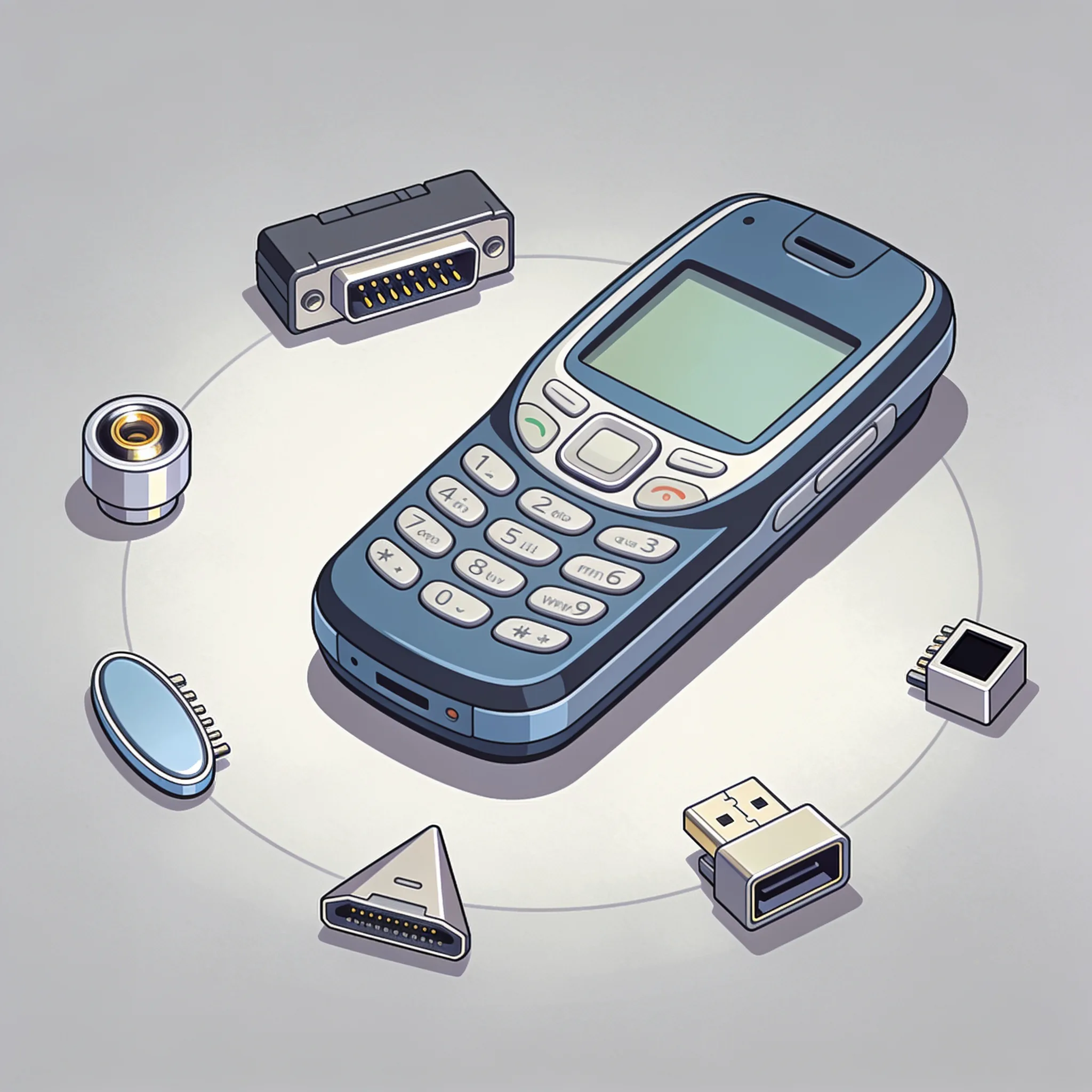
Before USB-C became the universal standard for smartphones, mobile manufacturers relied on a variety of proprietary charging connectors. These ports varied significantly in design, functionality, and compatibility across different brands.
The Motorola CE Bus Connector
First introduced on Motorola phones in 2000, the 17-pin CE Bus connector was notably large. It managed power, data, and audio simultaneously but lacked reversibility. This port appeared on models like the Motorola V60 and the ROKR E1, which was the first phone with iTunes support. Thinner devices like the Razr V3 eventually switched to Mini-USB, rendering the CE Bus obsolete.
Nokia Pop-Port
Nokia designed its Pop-Port connector with external accessories in mind, supporting earphones and data transfer cables. The 14-pin port featured on the Nokia 7210 from 2002 allowed for camera add-ons and car kits. However, the plastic clips often wore down over time, making connections unreliable during activities like jogging. While it supported charging, many Nokia devices of that era used separate barrel connectors instead.
Apple 30-Pin Connector
Apple introduced its proprietary 30-pin connector in 2003 on the third-generation iPod. This flat, wide port powered the first iPhone and iPad models and connected to speaker systems like Bose SoundDock. It supported FireWire and housed chips that regulated voltage, allowing Apple to collect licensing fees for third-party accessories. Apple replaced this with the Lightning connector in 2012 and later adopted USB-C for the iPad Pro in 2018 and the iPhone 15 lineup in 2023.
Sony Ericsson FastPort
The clunky FastPort debuted in 2005 on the Sony Ericsson K750i. This 12-pin connection handled data, charging, and audio output using double-sided plastic hooks. If a hook broke, the plug would no longer snap securely into place. Despite its flaws, the FastPort offered versatility that pointed toward future industry standards before being replaced by Micro-USB and the 3.5 mm audio jack combo in 2010.
HTC ExtUSB
The HTC Dream, the first commercially available Android phone, featured the chunky 11-pin ExtUSB port. Recognizable by its slanted corner, it combined the 5-pin Mini-USB port with extra pins for data, power, and audio. Regular Mini-USB chargers were compatible with this legacy port. This connector was exclusive to HTC's early Android and Windows Mobile devices until they transitioned to Micro-USB ports.
What it means
The shift away from these proprietary connectors reduced e-waste caused by switching chargers when changing phone manufacturers. Universal standards like USB-C simplify device maintenance and reduce costs for consumers who no longer need multiple adapters or cables for different brands.
However, the transition period created confusion as users accumulated various chargers and accessories that became incompatible with new devices. While modern standards offer improved power delivery and high-speed data transfers, the lack of a universal connector previously led to significant electronic waste.
Do you remember owning a phone with one of these older ports, and did you find the experience frustrating or nostalgic?